Our top picks at a glance
Nine of these ten machines are centrifugal, and that is the honest shape of this budget: a spinning basket, a wide chute where the design allows one, and juice in under a minute. The tenth, the AMZCHEF Slow Juicer ZM1501, presses slowly with an auger for anyone whose shopping list leans green. Everything here sits far below the machines in our best countertop juicer guide, and the money you save is paid back in smaller containers, shorter warranty cover and more plastic in the build, not usually in the juice itself.
The splits that matter inside the band are practical ones. Two picks, the Hamilton Beach Big Mouth and the Mueller Juicer Ultra Power, pair a 3 inch chute with the power and pulp capacity for more than one glass at a time. Two others, the Magic Bullet Mini Juicer and the SIFENE Compact Juicer AMR512, shrink the whole idea down to a single serving and a small footprint. The NutriBullet Juicer is the only pick here with a pitcher that seals for the fridge. Our first choice for most kitchens is the Hamilton Beach Big Mouth, because it combines the wide chute, dishwasher-safe parts and the longest warranty cover in this guide at the simple end of the market.
The working rule at this budget: buy the cleaning routine and the chute, in that order. A juicer you will rinse without resentment, fed through an opening that does not demand a chopping session first, gets used. Everything else is secondary.
 Hamilton Beach Big MouthBest overallCheck price on Amazon
 NutriBullet JuicerBest with a sealing storage pitcherCheck price on Amazon
 BLACK+DECKER Quiet JuicerBest for quieter morningsCheck price on Amazon
 Mueller Juicer Ultra PowerBest for big containersCheck price on Amazon
 AMZCHEF Slow Juicer ZM1501Best budget cold pressCheck price on Amazon
 Magic Bullet Mini JuicerBest for one personCheck price on Amazon
 Hamilton Beach HealthSmartBest compact from a big brandCheck price on Amazon
 Juilist Juicer AMR526Best three-speed valueCheck price on Amazon
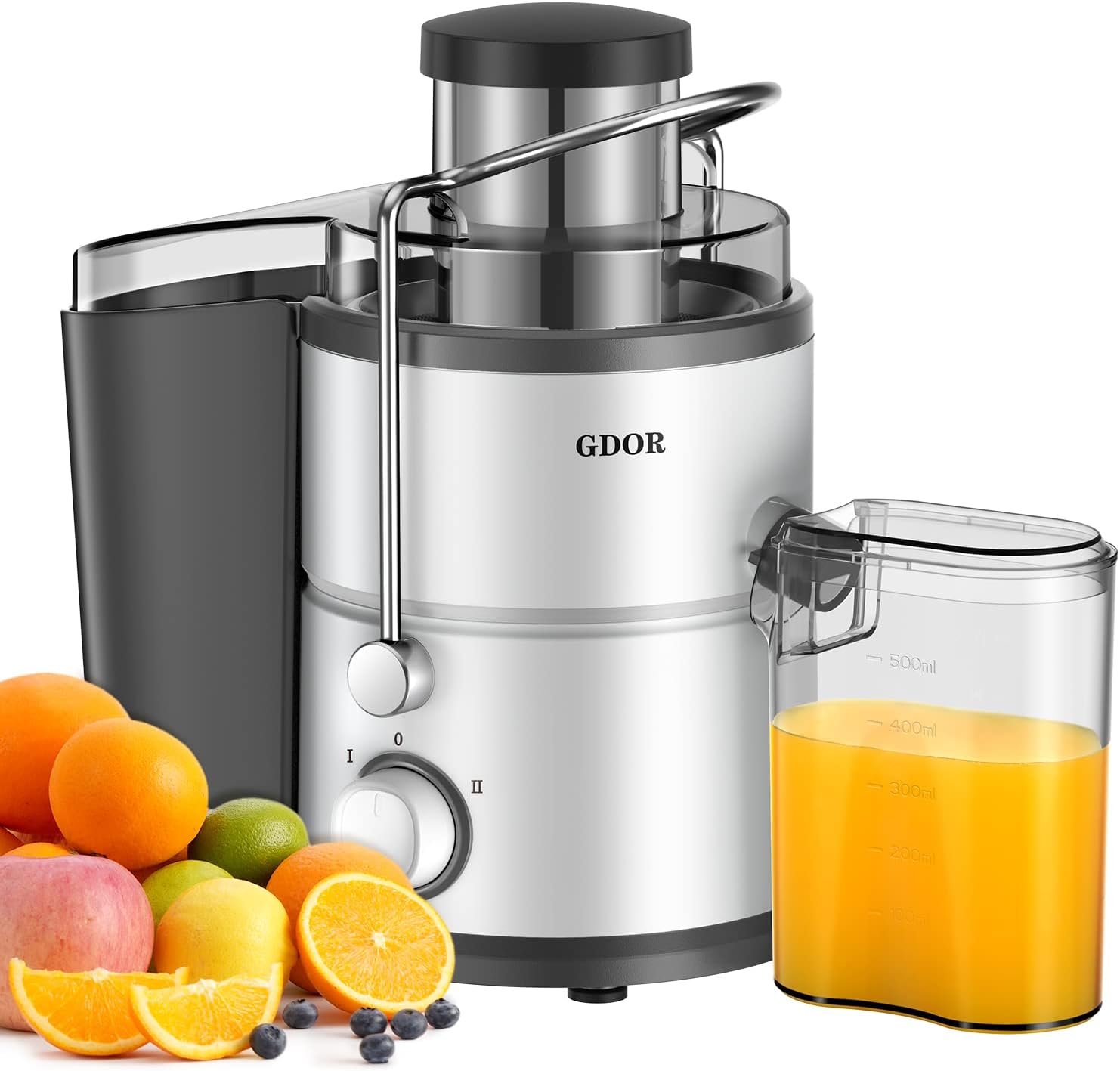 GDOR Juicer 800WBest low-cost wide chuteCheck price on Amazon
 SIFENE Compact Juicer AMR512Best tiny footprintCheck price on Amazon
Prices move up and down on Amazon, so we never print a price here that could be stale by the time you read it. Use the price check button to see the current price.
The Best Countertop Juicers Under 75, Reviewed in Full
Ten machines, each checked inside the budget, ordered by how well they serve a first or returning juicer who is watching the spend.
Hamilton Beach Big Mouth
The Big Mouth keeps its place at the top of this budget because it removes the two chores that kill cheap juicing. The 3 inch chute takes a whole apple, so the knife stays in the drawer, and the removable parts go in the dishwasher, with a cleaning brush in the box for the strainer basket. An 800 watt motor drives the centrifugal basket, juice runs straight from the spout into your own glass or jug because no juice container is included, and Hamilton Beach covers the machine with a 3 year limited warranty, the longest cover in this guide. Buy it if you want the proven budget pattern with the least prep and the least washing. Skip it if leafy greens lead your list, because a spinning basket leaves leaves underworked and the pulp wet.
Pros
- 3 inch chute takes whole apples and large pieces with little cutting
- Dishwasher-safe removable parts and a cleaning brush included
- 800 watt motor handles hard vegetables like carrots and beets
- Hamilton Beach provides a 3 year limited warranty
Cons
- No juice container included, so you supply your own glass or jug
- Leafy greens extract poorly and pulp comes out wet
- Single-purpose design with no extra attachments
NutriBullet Juicer
Most budget juicers pour into whatever you put under the spout. This one pours into a 27 oz pitcher with a sealing lid and a removable froth separator, so a morning batch can go straight into the fridge in the vessel it was made in. The full arrangement, an 800 watt motor with two speeds on a dial, a 3 inch chute, a 1.5 litre pulp basin and a stainless steel sieve, is set out on the official NutriBullet Juicer page. A cleaning brush is included, the spout rotates to catch drips after pouring, and the body measures 8.78 by 9.44 by 16.02 inches at 7.1 lb. NutriBullet covers the machine with a 1 year warranty. Buy it if you juice ahead and store, or juice for two and want the pitcher to double as the serving jug. Skip it if counter height is tight, because at just over 16 inches it is one of the taller picks here.
Pros
- 27 oz pitcher seals for fridge storage, with a froth separator in the lid
- Two speeds on a dial for soft fruit and hard vegetables
- 1.5 litre pulp basin allows a full batch before emptying
- Rotating spout catches drips after pouring
Cons
- Tall body at 16.02 inches needs cabinet clearance
- One year warranty cover, the shortest among the named-brand picks here
- Sieve needs the included brush worked around it after fibrous loads
BLACK+DECKER Quiet Juicer
Centrifugal juicers are loud by design, and this is the budget pick built to take the edge off that. The housing and cutter arrangement are what BLACK+DECKER calls its Quiet Technology, a maker claim rather than a measured figure, but the design intent is real enough: a 400 watt motor, a single speed, and a stainless steel cutter and strainer doing the work at a calmer pitch than the high-wattage picks. The pulp container holds 57 oz, the twist spout shuts to prevent drips, an easy-clean brush is in the box, and the machine measures 8.07 by 10.24 by 12.8 inches at 5.64 lb. BLACK+DECKER covers it with a 2 year limited warranty. Buy it if early starts in a shared or thin-walled home have ruled out a conventional centrifugal machine. Skip it if you juice hard produce in volume, because one speed and 400 watts ask for patience with beets and carrots.
Pros
- Housing and cutter designed to run quieter than typical centrifugal picks
- 57 oz pulp container suits several glasses before emptying
- Twist spout shuts against drips on the counter
- Light at 5.64 lb and compact enough to move in and out of a cupboard
Cons
- Single speed and 400 watts are slow going on hard vegetables
- No second speed or pulse setting for soft fruit that wants a gentler pass
- Quiet design softens the noise rather than silencing it
Mueller Juicer Ultra Power
The Mueller answers the small-container problem that limits most of this budget. Its juice jug holds 34 fl oz and its pulp container 68 fl oz, the largest pairing in this guide, so a family round or a prep batch runs without a mid-session emptying. Two speeds cover the range, the low band running at 12,000 to 15,000 RPM for softer produce and the high band at 15,000 to 18,000 RPM for hard vegetables, fed through a 3 inch chute. A safety locking arm holds the lid before the motor will run, the machine shuts off if it jams or overheats, and a cleaning brush is included for the stainless filter. The body is the heavyweight here at 13.6 by 9.3 by 16.9 inches and 10 lb, and Mueller covers it with a 2 year warranty. Buy it if you juice for several people at once and container size is your deciding point. Skip it if your kitchen is small, because this is a big, tall machine to house, and plan to hand wash the mesh filter rather than trusting it to the dishwasher.
Pros
- 34 fl oz juice jug and 68 fl oz pulp container, the largest in this guide
- Two speed bands matched to soft and hard produce
- 3 inch chute keeps chopping to a minimum
- Safety locking arm and automatic shut-off on a jam or overheat
Cons
- Largest and heaviest pick here at 10 lb and 16.9 inches tall
- Mesh filter rewards hand washing over the dishwasher
- Stainless body shows splashes and fingerprints readily
AMZCHEF Slow Juicer ZM1501
This is the one slow juicer in the ten, and it changes what the budget can do. A 150 watt motor turns a seven-spiral auger that presses produce rather than shredding it, so leafy greens and soft fruit come through a budget machine in a way no centrifugal basket manages, and the pulp leaves drier. A reverse function backs the auger out of a jam, juice and pomace collect in their own cups, and a cleaning brush is included. The trade-offs are the slow camp's usual ones: the feeder chute is small, so produce arrives in pieces you cut yourself, the parts are hand wash only, and continuous juicing is best kept inside a 20 minute session. Rinse the parts promptly after citrus-heavy loads, because the plastics are not built to sit in strong fruit acid. Buy it if greens and yield matter more to you than speed. Skip it if you juice for a crowd against the clock, because pressing is patient work and the cups are small.
Pros
- Slow auger pressing handles leafy greens that defeat centrifugal picks
- Drier pulp than any spinning basket here
- Reverse function clears jams without dismantling the machine
- Quiet, low-speed operation suits early mornings
Cons
- Small feeder chute means everything is cut down first
- Hand wash only parts, with a 20 minute continuous-use limit
- Small juice and pomace cups stop big batches into rounds
Magic Bullet Mini Juicer
The Mini Juicer is built around a single glass. A 400 watt centrifugal motor works through a 2 inch feed chute, and the juice lands in a 16 oz cup with a twist-on to-go lid, so the vessel you juice into is the vessel you carry out the door. The attachments go on the top rack of the dishwasher, a silicone spout cap catches drips between uses, and the whole machine measures 7 by 6 by 11.5 inches at 6.7 lb, small enough to live on the counter of a studio kitchen or slide into a cupboard. Buy it if you juice for one and the full-size machines above would spend their lives mostly empty. Skip it for anything resembling a batch, because a 16 oz cup and a 2 inch chute turn family juicing into a long sequence of small rounds.
Pros
- Juices straight into a 16 oz cup with a to-go lid
- Smallest footprint among the big-brand picks at 7 by 6 inches
- Top-rack dishwasher-safe attachments and a drip-catching spout cap
- Simple two-part routine suits a weekday morning
Cons
- 2 inch chute means most produce is halved or quartered first
- One serving per run, with no larger container option in the box
- 400 watts is the modest end for hard vegetables
Hamilton Beach HealthSmart
The HealthSmart is the Big Mouth's smaller sibling, trading the wide chute and the big motor for a footprint a small kitchen can absorb. The chute is 2.4 inches, the motor is 400 watts with a single speed, and the cutter and strainer are stainless steel. The pulp container holds 7 cups, the removable parts are dishwasher safe, and the machine measures 6.5 by 8.4 by 12.7 inches at just under 5 lb. No juice cup is included, so juice runs into your own glass under the spout, the same arrangement as the Big Mouth. Buy it if you want a known brand's compact machine for a glass or two a day and your counter is measured in inches. Skip it if whole-fruit feeding matters to you, because the 2.4 inch chute asks for a knife on apples and large oranges.
Pros
- Compact body at 6.5 inches deep suits small counters
- 7 cup pulp container is generous for the machine's size
- Dishwasher-safe removable parts keep the wash short
- Light at under 5 lb, easy to lift in and out of storage
Cons
- 2.4 inch chute means most fruit is cut before feeding
- No juice cup included in the box
- Single speed and 400 watts are slow on hard produce
Juilist Juicer AMR526
Three speeds are rare at this end of the market, where one or two is the pattern, and the AMR526 builds its case on that flexibility. Its motor is rated at 400 watts with a maximum power of 800 watts, the feed chute is 3 inches wide, and the juice cup holds 400 ml. The filter basket is stainless steel, the removable accessories are dishwasher safe, and a safety lock keeps the machine from running until it is assembled. Buy it if you split your juicing between soft fruit and hard vegetables and want a speed for each without paying for a bigger brand. Skip it if you juice in family quantities, because the 400 ml cup fills after roughly one large glass and the session becomes a series of pours.
Pros
- Three speeds where most budget rivals offer one or two
- 3 inch chute takes whole small fruit and large pieces
- Dishwasher-safe removable accessories
- Safety lock prevents running while unassembled
Cons
- 400 ml juice cup is the smallest container among the wide-chute picks
- Working motor rating of 400 watts is modest under hard loads
- Brand support network is thinner than the big names here
GDOR Juicer 800W
The GDOR strips the wide-chute formula down to its essentials. An 800 watt motor, two speeds and a 3 inch feed chute do the same basic work as the top pick, and the juice jug holds 17 oz with an anti-drip spout over it. The parts are BPA-free and a cleaning brush is in the box for the mesh. What you give up against the Hamilton Beach Big Mouth is refinement and backing: the build is plainer, the container smaller, and the brand a fraction of the size. Buy it if your budget is the hard limit and a wide chute matters more to you than brand support. Skip it if you juice daily and hard, because at this level the locking parts and mesh are the first things a heavy routine wears out.
Pros
- 800 watt motor and a 3 inch chute at the low-cost end of this guide
- Two speeds cover soft fruit and hard vegetables
- 17 oz juice jug included, with an anti-drip spout
- Cleaning brush included for the mesh basket
Cons
- Smaller juice jug than the Mueller and NutriBullet picks
- Plainer build and a smaller brand behind it
- No sealing storage option for juice made ahead
SIFENE Compact Juicer AMR512
The AMR512 is the space-saver of the ten. The body measures 7.28 by 11.42 by 12.99 inches, the motor is 350 watts, and the feed chute is 2.5 inches, yet it still finds room for three speeds including a pulse setting where most compact rivals offer one. That combination suits a small kitchen that juices a glass or two at a time and wants a low speed for soft fruit and a higher one for carrots without stepping up to a full-size machine. Buy it if counter space is your binding constraint and your juicing is single servings. Skip it if you feed a household, because the chute, the wattage and the scale of the machine all say one or two glasses at a time.
Pros
- Three speeds including pulse in a compact body
- Narrow 7.28 inch depth fits tight counters and cupboards
- 2.5 inch chute is wider than the other small picks here
- Light, simple machine for a glass or two a day
Cons
- 350 watts is the lowest rating in this guide
- Compact scale means small loads and frequent emptying
- Smaller brand with a thinner support network
What This Budget Does and Does Not Buy
This budget buys a complete, working juicer, and for most fruit and firm vegetables the glass it produces is hard to tell from a premium machine's. What it does not buy is the convenience engineering around the glass. Set side by side, the pattern is consistent: the extraction itself survives the price cut, and the feeding, storing and cleaning around it take the cuts. That trade is also the heart of budget countertop juicer vs premium countertop juicer, where the premium money mostly buys back prep time, container capacity and warranty years rather than a different drink.
| Decision point | Hamilton Beach Big Mouth | AMZCHEF Slow Juicer ZM1501 | Magic Bullet Mini Juicer |
|---|---|---|---|
| Extraction | Centrifugal basket, 800 watts | Slow auger press, 150 watts | Centrifugal basket, 400 watts |
| Feed opening | 3 inch chute, whole apples | Small chute, produce cut to pieces | 2 inch chute, produce halved or quartered |
| Juice container | None included, use your own glass | Juice cup included | 16 oz cup with a to-go lid |
| Pulp container | Extra-large pulp bin | Pomace cup included | Small internal bin for one serving |
| Cleaning | Dishwasher-safe parts, brush included | Hand wash only, brush included | Top-rack dishwasher-safe attachments |
| Warranty cover | 3 year limited warranty | No term published for this one | No term published for this one |
What the band genuinely buys: wide 3 inch chutes on five of the ten picks, two speeds on several of the centrifugal machines and three speeds on two of them, dishwasher-safe parts on the majority, cleaning brushes in nearly every box, and on the AMZCHEF a true slow press for greens. What it does not buy: self-feeding hoppers, sealed storage beyond the NutriBullet's single pitcher, the long warranty terms of the premium slow juicers, or the build weight that makes a machine feel settled under a hard load. If your juicing is fruit, carrots, celery and cucumber a few times a week, the first list is the whole story and the second list barely matters. If greens are the point, the second list is where your money would have gone.
Also considered
- Cuisinart CJE-500, a compact centrifugal juicer with a 16 oz pitcher and a 40 oz pulp container. It missed the ten because its current Amazon price sits above this budget, however good the fit would otherwise be.
- Ninja NeverClog JC151, a compact cold press juicer with two pulp filters and dishwasher-safe parts. It missed the ten because its Amazon price at research time sat well above this band; it is the step-up pick for anyone who outgrows the AMZCHEF above.
- BLACK+DECKER JE2200B, a 400 watt centrifugal juicer with stainless steel blades and strainer, a 300 ml pitcher, a 28 oz pulp container and dishwasher-safe parts, detailed on the official BLACK+DECKER JE2200B page. It missed the ten because no current Amazon.com price inside this budget could be verified for it in November 2026, and a budget guide cannot recommend on a price it cannot check.
- Dash Deluxe Compact Masticating Juicer, a small slow juicer with a pulp lever. It missed the ten because its Amazon reads sat just over the top of this budget at research time.
- Jocuu Slow Juicer, a compact masticating machine with two speed modes and a reverse function. It missed the ten because no in-budget Amazon price could be verified for it in November 2026; its last verified price sat above the band.
- PowerXL Self-Cleaning Juicers, excluded before ranking. Empower Brands recalled the SHL96 and SHL90-SC models in June 2023 under CPSC Recall 23-213 after reports of the juicers rupturing during use, and a recalled model has no place in a budget guide however cheap it becomes.
Who this guide is for
First-time juicers testing the habit
You are not sure fresh juice survives your routine, and you do not want premium money riding on the answer. Start with the Hamilton Beach Big Mouth or the GDOR Juicer 800W: a wide chute, a short wash, and a machine that has paid for itself in shop-bought juice within a few weeks of regular use. If the habit sticks, you will know exactly which upgrade your own routine is asking for.
Healthy home cooking on a budget
You juice as part of cooking, a few times a week, mostly fruit and firm vegetables with some greens. The centrifugal picks carry that load well. For the greens share, either accept wetter pulp and half-worked leaves from a basket, or take the AMZCHEF Slow Juicer ZM1501 and its slower, drier press.
Meal prep Sundays
Sunday's juicing has to survive in the fridge until midweek. Only one pick here seals its pitcher for storage, the NutriBullet Juicer; the Mueller's 34 oz jug is generous for making a batch but leaves the keeping to your own bottles. For any batch you plan to keep, the FDA guidance on juice safety is the reference that matters: scrub produce under running water, trim away bruised or damaged spots, and get untreated juice into the cold promptly.
Cooking for one
You want a glass of juice, not a production line. The Magic Bullet Mini Juicer juices into the cup you drink from, the Hamilton Beach HealthSmart keeps a big brand's build in a 6.5 inch depth, and the SIFENE Compact Juicer AMR512 adds speed choice at the same small scale. The wide-chute machines would spend their lives mostly empty in a one-person kitchen.
What to look for when buying a cheap countertop juicer
The full framework sits in how to choose a countertop juicer. At this budget, these checks do most of the work, including the features this money still buys and the signs of a bad one.
- Chute width against your patience. A 3 inch chute takes whole apples and small oranges. A 2 to 2.5 inch chute means halving or quartering nearly everything, every session. Five picks here keep the full 3 inches, so a narrow chute at this budget is a choice, not a necessity.
- Extraction matched to your produce. Centrifugal baskets are fast and handle fruit, carrots, celery and cucumber well, and they are the pattern this budget buys. If leafy greens lead your list, the one slow auger pick here is the honest route, because a basket spins leaves through half-worked.
- Speeds you will actually use. Two speeds, low for soft fruit and high for hard vegetables, cover a normal shopping list. Three speeds add a middle or pulse setting. One speed is fine if your produce never varies.
- Containers, checked before buying. Two picks here include no juice cup at all, two include cups of 16 oz or less, and only the Mueller and the NutriBullet pair a large pulp container with a jug worth the name. Decide where the juice lands before the machine arrives.
- The wash, counted in parts. Dishwasher-safe removable parts and an included brush are standard at this budget and present on most picks here. Hand-wash-only mesh and many small parts are the two patterns that wear out a new juicer's welcome.
- How to spot a bad cheap juicer. Walk away from a machine with no published chute width, no named container sizes, a locking arm that feels like an afterthought, or a brand with no findable warranty or support route. Check any too-cheap machine against the CPSC recall records before buying, because recalled models circulate at discount prices long after a recall. A juicer whose pulp comes out dripping on firm produce, or whose motor strains audibly on a carrot, is telling you its working limits in the first week.
Countertop juicer sizes and capacity on a budget
Capacity at this budget means the same three things it does at any price: how much juice you can make before stopping, how much produce loads at once, and how much counter the machine takes while doing it. The numbers shrink, the logic does not.
- Single-serving machines: the Magic Bullet Mini Juicer with its 16 oz cup and 7 by 6 inch footprint, the SIFENE Compact Juicer AMR512 at 7.28 inches deep, and the Hamilton Beach HealthSmart at 6.5 inches deep with a 7 cup pulp container. One or two glasses, a fast wash, and a machine that stores in a cupboard.
- Mid-size family machines: the NutriBullet Juicer with its 27 oz pitcher and 1.5 litre pulp basin, and the BLACK+DECKER Quiet Juicer with a 57 oz pulp container. A round for two to four people without a mid-session stop.
- Batch machines: the Mueller Juicer Ultra Power, with a 34 fl oz juice jug and a 68 fl oz pulp container, is the only pick here sized for a genuine prep session, and it pays for it at 16.9 inches tall and 10 lb.
Height is the quiet constraint at this budget too. The Mueller and the NutriBullet both stand over 16 inches, so measure the gap under your wall cabinets before choosing either, and remember the feeder and lid need room to lift, not just to stand.
How much does a good countertop juicer cost?
Rather than print figures that would date within weeks, this section sticks to what actually sets the price. Extraction method is the first driver: a centrifugal juicer is a motor, a basket and a chute, which is why this budget is full of them, while a slow auger machine carries a heavier low-speed drive and a more complex pressing chamber, which is why only one appears here.
Containers and materials are the second driver. A sealing pitcher, a 68 oz pulp container or a stainless body each cost money to make, and at this budget each one is usually traded against another: the Mueller buys size with a hand-wash filter, the NutriBullet buys storage with a taller body. Warranty length is the third driver, and it tracks the maker's confidence in the build: the cover in this guide runs from a single year to three, against the decade-plus terms at the premium end. A good juicer at this level is not the cheapest one on the page; it is the one whose chute, containers and cleaning routine match your week, with enough warranty behind it to survive learning the habit.
Countertop juicer running costs and accessories to budget for
The machine is the small cost in juicing. Produce is the large one: a daily glass consumes several pounds of fruit and vegetables a week, and a budget juicer fed on out-of-season produce will cost more to run than a premium juicer fed from a market box. Buy produce for juicing the way you would for cooking, in season and in bulk where it keeps.
Accessories are modest but real. Most picks here include a cleaning brush, and a spare is worth having because a lost brush turns mesh cleaning into a fingernail job. A replacement strainer basket is the one wear part on a centrifugal machine: budget for one across the machine's life rather than a new juicer when the mesh dulls or tears. Slow juicer parts wear more slowly, and the AMZCHEF asks only for prompt rinsing and ordinary washing supplies. Electricity is a rounding error beside produce: even the 800 watt picks run for a minute or two at a time. The honest running-cost summary is that this budget shifts spending from the machine to the shopping list, which is where it belongs.
Common mistakes when buying a cheap countertop juicer
- Buying a centrifugal juicer for a greens habit. The basket leaves kale and spinach half-worked and the pulp wet. If greens lead, buy the slow pick or save longer; a cheap machine that cannot do your main job is the expensive outcome.
- Paying for wattage alone. An 800 watt badge on a small basket does not extract like a well-fed 400 watt machine with the right speed for the produce. Chute width and speed choice change your mornings more than the motor figure does.
- Forgetting the containers. Two picks here ship without a juice cup. Discovering that at first use, with juice already running, is a rite of passage this guide exists to prevent.
- Letting pulp dry on the mesh. Dried pulp turns a two minute rinse into a soaking and scrubbing session, and it is the single most common reason budget juicers get abandoned. Rinse straight after use, and read how to clean a countertop juicer before the machine arrives.
- Storing fresh juice like shop juice. Home juice is untreated. Seal it, refrigerate it promptly and drink it within a few days rather than a week.
Budget Countertop Juicer Pros and Cons
Pros
- A complete working juicer for a small outlay, with wide 3 inch chutes on five of the ten picks
- Juice in under a minute from the centrifugal picks, fast enough for a weekday morning
- Dishwasher-safe parts and an included cleaning brush are standard across most of the band
- Compact models bring juicing to small kitchens that cannot house a full-size machine
Cons
- Nine of the ten are centrifugal, so leafy greens and wheatgrass are worked poorly and pulp runs wet
- Containers are small across most of the band, which turns family juicing into rounds
- Warranty cover of one to three years replaces the long terms of the premium slow juicers
- Plastic-heavy builds and small locking parts wear faster under a daily hard-produce routine
Who should not buy a cheap countertop juicer
If green juice is the main event, kale, wheatgrass and herbs in quantity, a budget centrifugal machine will disappoint you within the first week and the one slow pick here works at a scale that suits a person, not a programme. Save for a full-size slow juicer instead. If you juice for a household every day, the small cups, bins and locking parts across this band will wear on you and then wear out; the mid-priced machines exist for your routine. If you will not rinse parts straight after use, no juicer at any price survives your kitchen, and a blender for smoothies is the honest buy. And if your juicing is citrus only, a small citrus press does that single job better and cheaper than any machine in this guide.
Countertop Juicer Under 75: Frequently Asked Questions
Is a cheap countertop juicer worth it under 75?
Yes, for fruit and firm vegetables, with the right expectations. The centrifugal machines in this guide make a proper glass of juice in under a minute, and the best of them pair a wide chute with dishwasher-safe parts and a three year warranty. What the money does not buy is greens performance, storage engineering or premium build weight. As a way to learn whether juicing fits your life, this budget is the sensible place to start.
What do you give up with a budget countertop juicer?
Mainly the convenience around the juice rather than the juice itself. You give up self-feeding hoppers, large sealed storage, the longest warranty terms, heavy settled builds, and, on nine of these ten machines, any real ability with leafy greens. Containers shrink to a serving or two, chutes narrow on the compact picks, and the wash is yours to do promptly because the parts are lighter.
Which countertop juicer features do you still get under 75?
More than the price suggests. Wide 3 inch chutes appear on five picks here, two or three speeds appear on five of them, dishwasher-safe parts and cleaning brushes are close to standard, and safety locking arms and overheat shut-offs show up on the better budget machines. One pick presses slowly with an auger for greens, and one seals its pitcher for the fridge. The features that vanish are hoppers, big containers and long warranties, not the basics.
How do you spot a bad cheap countertop juicer?
Look for what is missing. No published chute width, no named container sizes, no findable warranty or support route, and a price that undercuts every comparable machine by a wide margin are the reliable tells. Check the model against the CPSC recall records before buying, because recalled juicers keep circulating at discount. In the first week, dripping pulp from firm produce and a motor that strains on a carrot are the machine confessing its limits.
When is the best time to buy a countertop juicer on sale?
Around the big retail events: the January sales that follow the resolution season, Amazon's summer and autumn event days, and the late November discount weekend, when small appliances are discounted as a category. The practical move is to choose your model first using a guide like this one, then wait for the next event rather than letting an event choose a model for you. A discounted machine that fits your routine beats a deeper discount on one that does not.
Keep researching this countertop juicer
the full guide across every price, from this budget's patterns up to the self-feeding slow juicers.
ComparisonBudget Countertop Juicer vs Premium Countertop Juicerwhat the premium money actually buys, in hopper design, containers, warranty length and build, set against this budget.
How to ChooseHow to Choose a Countertop Juicerthe full framework for extraction methods, chute sizes, capacity and cleaning, in one place.
Use & CareHow to Clean a Countertop Juicerstrainer care, pulp removal and the habits that decide how long a juicer stays pleasant to use.
More in Kitchen & Cookware
Kitchen & CookwareAll Pick Hearth guides in this categoryHow we check countertop juicers like these
Read the full Pick Hearth methodology- Band checked on the Amazon.com listing for every pick: each machine here sat genuinely inside this budget at research time on 12 November 2026, with dated evidence logged per product; picks that only reached the band through a coupon or a different variant were replaced.
- Type and premise checked against manufacturer specifications: every pick is a real countertop juicer for a home kitchen, centrifugal or slow masticating as its card describes, with chute widths, container sizes, speeds and dimensions taken from maker and listing documents.
- Recall check run for the whole pool against CPSC records: the PowerXL self-cleaning juicers under Recall 23-213 were excluded before any ranking, and no pick here is a recalled model.
- Containers and cleaning verified pick by pick: what lands in the box, which parts are dishwasher safe and which are hand wash only, because those details decide whether a budget juicer stays in use.
- No brand can pay for a place, and affiliate earnings never change the order: the ranking follows chute width, cleaning burden, container capacity and footprint, in that order.
First published · Updated in place as products and specs change