Our top picks at a glance
Nine of the ten cookers here are electric, and they split on one question: how much of the rice decision does the machine make for you? At one end, a dedicated rice program weighs nothing and judges nothing, it simply runs a proven time at a set pressure and then holds the result warm. In the middle, the smarter machines add separate white and brown rice programs, a scale that weighs the grain before it calculates the water, or a choice of pressure levels you can match to the grain in the pot. At the far end sits one stovetop pot that makes no decision at all, and rewards a cook who likes to time rice by ear and eye.
Our first choice for most rice cooks is the Instant Pot Duo, because its rice function, stainless pot and 6 quart size cover white, brown and mixed grains for a household without any app, account or learning curve standing between you and dinner. If your rice problem is small batches that turn gummy in a big pot, the Instant Pot Duo Mini cooks in 3 quarts, a size that suits one or two cups of dry rice far better. If sticky pots are your complaint, the COSORI and its ceramic-coated inner pot release the bottom layer cleanly, and if you want the machine to weigh the rice and set itself, the CHEF iQ does exactly that.
Keep warm quietly splits this list in two. Every electric pick holds cooked rice warm automatically when the cycle ends, which matters on the nights rice finishes twenty minutes before everything else. The stovetop Presto cannot do that job at all, and it is in this guide for cooks who serve rice the moment it rests, not for households that graze from the pot all evening.
 Instant Pot DuoBest overall for riceCheck price on Amazon
 Instant Pot ProBest for cooks who tweak grain settingsCheck price on Amazon
 Instant Pot Duo MiniBest for rice for one or twoCheck price on Amazon
 Instant Pot RIOBest current entry model for riceCheck price on Amazon
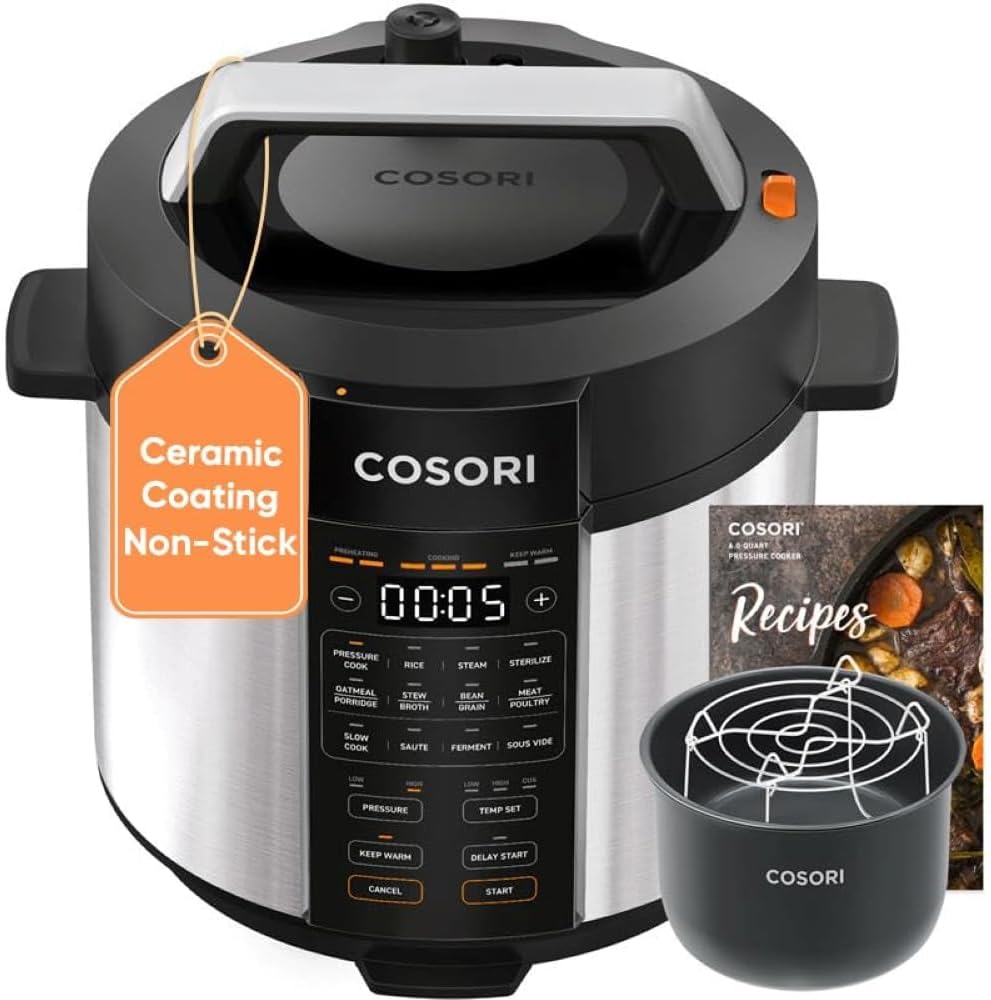 COSORI Pressure CookerBest ceramic pot for easy rice releaseCheck price on Amazon
 CHEF iQ Smart Pressure CookerBest guided rice with a built-in scaleCheck price on Amazon
 Breville Fast Slow ProBest premium control for grainsCheck price on Amazon
 Ninja Foodi OL501Best for rice plus crisping in one lidCheck price on Amazon
 Presto Electric Pressure Cooker PlusBest simple electric with a rice presetCheck price on Amazon
 Presto Stainless Steel Pressure CookerBest stovetop for riceCheck price on Amazon
Prices move up and down on Amazon, so we never print a price here that could be stale by the time you read it. Use the price check button to see the current price.
The Best Pressure Cookers for Rice, Reviewed in Full
Instant Pot Duo
The Duo stays at the top of this guide because rice is a named job on its front panel, not a workaround. One of its seven functions cooks rice directly, alongside pressure cooking, slow cooking, sautéing, steaming and yogurt, with keep warm holding the finished pot until you serve. The 6 quart stainless steel inner pot holds enough grain for up to six servings, the pot has no coating to scratch with a rice paddle, and thirteen customisable programs cover the bean, grain and porridge work that surrounds a rice habit. At 1000 watts it comes to pressure at the pace family dinners expect. The honest limit is finesse: there is one rice program rather than separate white and brown settings, so brown rice means adjusting the time yourself. Buy it if rice is a weekly staple for a household and you want the proven, simple route. Skip it if you cook one cup at a time, where the Mini below wastes less heat and less washing up.
Pros
- Dedicated rice function with automatic keep warm after the cycle
- 6 quart stainless steel pot, no coating to damage
- Seven functions and thirteen customisable programs in one body
- Pot and lid parts go in the dishwasher
Cons
- One rice program, so brown rice needs a manual time adjustment
- 6 quarts is oversized for a single cup of rice
- Steam release is a manual valve you turn yourself
Instant Pot Pro
The Pro is the Instant Pot for cooks who found the Duo's single rice button too blunt. Its panel carries separate White Rice and Brown Rice programs among ten cooking functions and twenty eight one touch options, and favourite buttons let you save the exact time that works for your usual grain so the next batch starts from your setting, not a factory guess. The 6 quart pot serves up to six, a 1200 watt element brings it to pressure briskly, and the steam release is a switch with a diffusing cover, which vents more gently around starchy foam than an open valve. An extra sealing ring and a steamer rack with handles come in the box, and the spare ring matters for rice cooks: a ring that smells of last night's curry will scent plain rice, so one ring for savoury work and one for grains is a real routine, not an accessory habit. Buy it if you rotate white, brown and wild grains and want each one saved as its own setting. Skip it if one rice button already covers your cooking, because the Duo does that job for a smaller commitment.
Pros
- Separate White Rice and Brown Rice programs on the panel
- Favourite buttons save your own grain times
- Gentle steam release switch with a diffusing cover
- Extra sealing ring included for a grains-only ring
Cons
- Twenty eight options is a longer panel to learn
- Same 6 quart size as the Duo, no smaller option in this design
- The step up buys settings, not a bigger or better pot
Instant Pot Duo Mini
The Mini exists because rice for one behaves badly in a family sized pot. A single cup of dry rice in 6 quarts spreads thin across a wide base, the water ratio gets harder to judge, and the bottom layer scorches while the top steams. In this 3 quart version the same Duo design, seven functions with a dedicated rice program and eleven smart programs, works at the scale small batches need: the grain sits deeper, the liquid line is easier to read, and the 700 watt element is sized to the pot. It cooks for up to three people, the stainless inner pot has a tri-ply bottom for even sautéing before the lid goes on, and at 8.65 lb and about 10 in tall it stores where a 6 quart body will not. Keep warm holds a small batch ready without the long, drying hold a big pot gives a small amount of rice. Buy it if you cook rice for one or two, or as a second pot that runs the rice while a larger cooker handles the main dish. Skip it if you batch cook grains for the week, because three quarts fills fast.
Pros
- 3 quart pot suits one or two cups of dry rice
- Same Duo rice function and keep warm in a compact body
- Stainless tri-ply inner pot, dishwasher safe with the lid
- About 10 in tall, the easiest electric pick here to store
Cons
- Cooks for up to three people at most
- 700 watts comes to pressure more slowly than the 6 quart models
- Too small for pot in pot cooking with a large second dish
Instant Pot RIO
The RIO is the current entry design in the Instant Pot range, and for rice it keeps the formula that works: seven functions with rice making and warming among them, a 6 quart stainless steel pot and a 1000 watt element. What changes is the body around that formula. The control panel is flat and wipes clean of the flour and starch dust that collect around raised buttons, the inner pot has an anti-spin design that holds it still while you stir a pilaf base, and the steam release works from a switch rather than a loose valve. The pot shape runs a little wider and shorter than the Duo's, which gives a broad base for toasting grains in oil before the water goes in. In Sea Salt white it also sits more quietly on a light counter than the black and steel bodies around it. Buy it if you are buying your first pressure cooker now and want the current design for everyday rice. Skip it if you already own a working Duo, because the rice result is the same and the upgrade is in the controls and the shape, not the grain.
Pros
- Rice and keep warm functions in the current entry design
- Flat panel wipes clean, anti-spin pot steadies stirring
- Switch style steam release, easier than a loose valve
- Wide base suits toasting grains for pilaf style rice
Cons
- No separate brown rice program at this level
- Newer design has a shorter track record than the Duo
- Colour choice is limited on this variant
COSORI Pressure Cooker
The COSORI answers the complaint stainless pot owners know well: the bottom layer of rice that welds itself to the base. Its inner pot carries a ceramic coating, so cooked grains release with a paddle instead of a soak, and the panel gives rice its own button alongside steam, oatmeal and porridge, bean and grain, slow cook, sauté, ferment and sous vide. Two details show a maker thinking about starchy cooking. The steam release angles backward at 30 degrees, away from the hand that triggers it, and the seal and vent control sits apart from the valve itself. The working pressures are published in two bands, 5.1 to 8 psi on low and 9.4 to 12.3 psi on high, so a delicate grain can run genuinely gentler than a bean stew. The 6 quart pot serves four to six, the element is 1100 watts, and COSORI covers the cooker with a 2 year limited warranty. Buy it if sticky pots and scorched bottoms are why your current cooker sits unused. Skip it if you are hard on coatings with metal utensils, because the ceramic surface asks for wood, silicone or plastic tools.
Pros
- Ceramic-coated pot releases cooked rice without soaking
- Rice, oatmeal and bean grain programs on one panel
- Angled steam release set away from the vent control
- 2 year limited warranty
Cons
- Coating needs non-metal utensils and gentler washing
- No separate white and brown rice programs
- Ceramic pot is a replacement cost stainless never asks for
CHEF iQ Smart Pressure Cooker
Rice goes wrong at the measuring cup more often than at the valve, and the CHEF iQ is built around that fact. A scale inside the cooker weighs the grain you pour in, the app works out the water and the time from that weight, and hundreds of guided recipes and presets walk the cook through each stage on the cooker's own screen. For rice, that removes the two classic errors in one move: too much water for the grain actually in the pot, and a guessed time for a brown or wild blend. When the cycle ends the cooker releases pressure on its own, choosing quick, pulse or natural release as the program directs, which keeps starchy foam down without anyone hovering over a valve. The body is a 6 quart, 1000 watt, ten function machine at 10.4 lb, the lightest full size electric here, and it carries ETL safety certification. The trade is dependence: the guided route runs through WiFi, Bluetooth and an account, and the cooker gives up much of its advantage if your kitchen routine avoids apps. Buy it if your rice results swing between soupy and scorched and you want the weighing and timing taken over. Skip it if you want a cooker that is fully itself with no phone in the room.
Pros
- Built-in scale weighs rice in the pot before cooking
- Guided recipes set water and time from the weighed amount
- Automatic pressure release with quick, pulse and natural methods
- Lightest 6 quart electric pick here at 10.4 lb
Cons
- Guided cooking depends on the app and a WiFi connection
- A screen and scale are more to go wrong than a plain panel
- No benefit if you already measure rice by weight yourself
Breville Fast Slow Pro
The Fast Slow Pro is the control pick, and grains are where control pays. Two sensors, one at the top of the bowl and one at the bottom, track temperature and pressure together, and eleven pressure cook settings spread across eight pressure levels from 1.5 psi to 12 psi let you run a fragile jasmine gently or a dense brown rice firmly, with a custom setting for the combination your household repeats. Steam release is hands free and automatic, choosing quick, pulse or natural, and the colour LCD shows pressure, temperature and the countdown together, so a pot of rice is never a black box. The 6 quart bowl is ceramic coated and free of PFOA and PTFE, the hinged lid lifts off for the dishwasher, and a stainless steamer basket, a rack and a recipe book come in the box. Slow cook settings from high to low and keep warm round out a machine built for cooks who adjust. At 1100 watts and 13.6 lb it is a settled counter appliance with a 1 year warranty. Buy it if you cook several grains a week and want pressure level, not just time, under your control. Skip it if a single rice button covers your needs, because the premium buys adjustment you will never touch.
Pros
- Eight pressure levels from 1.5 psi to 12 psi for different grains
- Dual sensors at the top and bottom of the bowl
- Hands free automatic steam release in three methods
- Colour LCD shows pressure, temperature and countdown at once
Cons
- Premium price against every other electric pick here
- 1 year warranty, shorter than the COSORI cover
- Settings depth is wasted on one-button rice cooking
Ninja Foodi OL501
The OL501 earns its place for households whose rice arrives under something crisped: chicken thighs, salmon or tofu finished in the same pot the grains cooked in. One lid does everything here. A slider on the SmartLid moves between pressure, steam crisp and air fry modes across fourteen functions, so rice cooks under pressure and the topping crisps without a second lid to store or swap. The cooking pot holds 6.5 quarts, the crisp plate holds 4.6 quarts, a two layer setup lets a main and a side run together, and the ceramic coated pot and parts go in the dishwasher. One safety point needs plain words. This SmartLid model is not part of the CPSC recall of the earlier OP300 series Foodi cookers, which covers the older two lid design under recall number 25-247; the OL501's single lid and slider are a different design, and the model number is the thing to check on any Foodi you buy. At 1460 watts it is the most powerful cooker here and one of the largest on the counter. Buy it if rice is usually the base for a crisped main and counter space rules out two appliances. Skip it if rice is the whole job, because you would be storing an air fryer you never open.
Pros
- One SmartLid covers pressure, steam crisp and air fry modes
- 6.5 quart pot with a 4.6 quart crisp plate and two layer cooking
- Rice and a crisped topping finish in the same pot
- Ceramic coated pot and parts are dishwasher safe
Cons
- Largest and heaviest footprint among the electric picks
- Fourteen functions is a lot of machine for rice alone
- Older OP300 series Foodis are recalled, so check model numbers carefully
Presto Electric Pressure Cooker Plus
Presto has made pressure cookers longer than anyone else in this guide, and its electric model keeps the panel refreshingly short. A Rice and Multigrain button sits on the front beside brown and sauté, soup and stew, poultry and slow cook settings, with high and low pressure and a keep warm stage behind them. Digital controls and an LED countdown run the 6 quart pot, the inner pot is a PFAS free ceramic nonstick that releases rice cleanly and wipes out fast, and eight safety features include a cover locking system that will not let the lid turn under pressure. Power is about 1005 watts, in line with the other 6 quart electrics, and a 1 year limited warranty backs the machine. There is no app, no scale and no sous vide, and for a rice first kitchen that restraint is the point: fewer programs to scroll, the same grains every night. Buy it if you want a rice preset and a short panel from a pressure cooking specialist. Skip it if you want guided recipes or grain by grain settings, where the CHEF iQ and the Pro above do more.
Pros
- Rice and Multigrain preset on a short, clear panel
- PFAS free ceramic nonstick pot releases rice cleanly
- Cover locking system among eight safety features
- No app or account needed for any function
Cons
- 1 year limited warranty
- No sous vide, ferment or guided cooking extras
- Fewer grain specific programs than the Pro or the CHEF iQ
Presto Stainless Steel Pressure Cooker
The one manual pot in this guide works the old way, and it is upfront about what stovetop rice takes. There is no rice button and no keep warm stage: you bring the 6 quart stainless pot to pressure on the hob, the automatic regulator holds that pressure, you time the grains yourself, and you take the pot off the heat to rest. In return you get things no electric pick offers. The tri-clad base works on gas, electric and induction, a cover lock indicator shows the lid state at a glance, a cooking rack comes in the box for pot in pot rice above a stew, the pot itself goes in the dishwasher, and the warranty runs to 12 years, by far the longest cover here. At 6.6 lb it is also the lightest full size cooker in the guide and the only one that stores like an ordinary saucepan. Rice from it can be excellent, fluffy and separate, once your timing is dialled in, and unforgiving before that day arrives. Buy it if you like cooking by feel, want induction ready steel, and serve rice as soon as it rests. Skip it if your dinners need rice to hold warm for an hour, because holding is the one job this pot cannot do.
Pros
- Tri-clad stainless base works on gas, electric and induction
- 12 year limited warranty, the longest cover in this guide
- Cooking rack included for pot in pot rice
- Stores like a saucepan at 6.6 lb, no counter footprint
Cons
- No rice preset and no keep warm stage at all
- Timing and heat control are entirely the cook's job
- Easy to scorch a first few batches while learning your hob
Stainless, ceramic or stovetop steel: how rice splits these cookers
Rice divides this guide three ways, and the split is about the pot under the grain and the hand on the valve, not about brand. The full Pressure Cooker vs Slow Cooker comparison covers the slower alternative for grains and stews; the table below compares the three routes inside this guide against each other.
| Point of difference | Stainless electric pots | Ceramic-coated electric pots | Stovetop steel |
|---|---|---|---|
| Rice route | A rice program or saved grain settings run the batch | A rice program runs the batch, the coating handles the release from the pot | The cook times the batch on the hob and rests it off the heat |
| Bottom layer | Can stick and needs a soak after plain rice | Releases with a paddle, gentlest on sticky grains | Can catch if the heat stays high, improves with practice |
| Keep warm | Automatic hold after every cycle | Automatic hold after every cycle | None, rice is served after its rest |
| Utensils and care | Any paddle, pot tolerates metal and the dishwasher | Wood, silicone or plastic tools to protect the coating | Any utensils, pot goes in the dishwasher |
| Picks here | Instant Pot Duo, Instant Pot Pro, Instant Pot Duo Mini, Instant Pot RIO | COSORI Pressure Cooker, CHEF iQ Smart Pressure Cooker, Breville Fast Slow Pro, Ninja Foodi OL501, Presto Electric Pressure Cooker Plus | Presto Stainless Steel Pressure Cooker |
Inside the electric group, guidance is the second split. The Duo, the RIO, the COSORI and the Presto Plus run a rice program and stop there. The Pro saves your own grain times, the Breville hands you the pressure level itself, and the CHEF iQ weighs the rice and calculates from the weight. Pay for guidance only when your results actually vary: a household cooking one white rice the same way every week gains nothing from a scale, while a kitchen rotating jasmine, brown, wild and mixed grains gains from every saved setting.
What the expensive end really adds
Premium money in this guide buys measurement and control, nothing more mystical. The Breville buys sensors and pressure levels, the CHEF iQ buys a scale and automatic release, and the Ninja buys a second cooking method under the same lid. None of them makes plain white rice taste better than the Duo does on its rice program. Pay the premium when the extra measurement solves your actual failure, scorched layers, soupy batches or a topping that needs crisping, and keep the difference for good grain when it does not.
Also considered
- Instant Pot Duo Plus: the 9-in-1 step up from the Duo, with sous vide, a quieter steam release and a rice program that holds warm automatically. It missed the ten because the Pro covers the step up role with separate white and brown rice programs and saved favourites, and the RIO covers the current entry role, so a third mid range Instant Pot would have pushed out another maker.
- Kuhn Rikon Duromatic: a Swiss stovetop saucepan in 18/10 stainless with a sandwich base for every hob including induction, five over-pressure safety systems and a 10 year warranty on its non-replaceable parts. It missed the ten because the Presto stovetop holds the manual place with a 12 year warranty and wider availability, at a far smaller commitment.
- COMFEE 12-in-1 Electric Pressure Cooker: a 6 quart cooker with a 24 hour delay timer and keep warm at an entry price. It missed the ten because published descriptions of its own inner pot disagree with each other, ceramic coated, nonstick aluminium and stainless all appear, and a rice guide cannot recommend a pot it cannot pin down.
- Fissler Vitaquick: a German made stovetop cooker at 4.8 quarts with a steamer insert and a clear pressure indicator. It missed the ten because its rice case rests on the same manual timing as the Presto stovetop, which carries the longer warranty, and its price sits at the premium end for a pot with no keep warm.
- Instant Pot Duo Crisp: pressure cooking with a second air fryer lid in the 8 quart size. It missed the ten because the Ninja OL501 covers the pressure plus crisp role with one lid instead of two to store, and 8 quarts is more pot than rice first cooking needs.
Who this guide is for
Households that cook rice most nights
You need a cooker that treats rice as a staple, not a side project. Start with the Duo or the Pro in 6 quarts, pick stainless if your rice paddle is metal and ceramic if soaking pots is the chore you hate, and let keep warm cover the gap between the rice finishing and everything else landing.
Cooking for one or two
Small batches are your whole case. The Duo Mini cooks one or two cups of dry rice at the depth they need, and the routine in How to Maintain a Pressure Cooker, the ring washing, valve clearing and pot care that keeps a small cooker sealing properly, matters more at this size because a small pot shows a tired sealing ring sooner. A 3 quart cooker also doubles as the second pot in a bigger kitchen, running rice while the main cooker is busy.
Small kitchens and tight counters
Your limit is storage. The Mini is the only electric pick here that stores like a small appliance, the stovetop Presto stores like a saucepan and needs no counter at all, and every 6 quart electric in this guide should be measured against your cupboard height with its lid on before you buy.
Cooks who crisp on top of rice
Your plate is rice plus a finished main. The Ninja OL501 is built for you, pressure cooking the grains and crisping the topping under one lid, and the two layer setup lets a vegetable side ride along with the main.
What to look for when buying a pressure cooker for rice
The full framework sits in How to Choose a Pressure Cooker. For rice, five points carry the decision.
- A real rice route. A dedicated rice program, separate grain programs, a scale that calculates from weight, or honest manual timing on a stovetop pot. What you want to avoid is a cooker whose only route to rice is guessing a pressure time from a stew chart.
- Pot material matched to your habits. Stainless tolerates any utensil and never needs replacing. Ceramic coatings release sticky grains cleanly and ask for gentle tools in return. Choose by how you actually wash and stir, not by which sounds better.
- Keep warm that suits your evenings. Every electric pick here holds rice warm automatically. That hold is for the gap before serving, not for storage: cooked rice belongs in the fridge within two hours, a rule the FoodSafety.gov guidance on leftovers and cooked rice sets out alongside shallow containers and reheating leftovers thoroughly.
- A steam release you can manage around foam. Starchy water foams. A diffusing cover, an angled valve set away from your hand, or an automatic release all beat leaning over an open jet of steam after a pot of rice.
- A sealing ring plan. Rings absorb odours. Makers sell spares cheaply, the Pro includes one, and a grains only ring keeps plain rice tasting like rice after a week of curries.
Pressure cooker sizes and rice capacity
Read pressure cooker sizes in dry rice, not in quarts of soup. A pressure pot fills to two thirds at most for ordinary foods, and grains and other foaming foods stop at half full, because rice swells and its starch foams toward the valve. That half line is the number that governs your batch.
- 3 quart class. The Duo Mini. One to two cups of dry rice comfortably, dinner for one to three, and the right depth for small batches to cook evenly instead of spreading thin.
- 6 to 6.5 quart class. Every other pick here. Three to four cups of dry rice inside the half fill limit, which cooks up to a family dinner plus leftovers, with room above the grain for the foam to settle.
- Bigger than 6.5 quarts. Useful for stock and large stews, oversized for rice. A small batch in a very large pot needs more minimum liquid than the grain wants, and the texture suffers for it.
One habit prevents most foaming failures: rinse white rice until the water runs clearer before it goes in. Loose surface starch is what climbs the valve, and two minutes at the sink is cheaper than cleaning a lid.
How much does a good pressure cooker cost?
These cookers change price too often for any figure printed here to stay accurate; what drives the price of each one barely changes. Guidance is the first: a plain rice program costs the least to build, saved grain settings and pressure level control cost more, and a built in scale with an app behind it costs the most. Pot material is the second driver, because a ceramic coated pot is a part with a lifespan where a stainless pot is effectively permanent, and the stovetop pot shows the floor of the whole category: no element, no electronics and no panel, just steel, a regulator and a long warranty.
Lid design moves the rest. A second cooking method under the lid, as on the Ninja, prices like the extra appliance it replaces, and automatic steam release adds parts to any design. Readers working to a firm ceiling should read Best Pressure Cooker Under 100 alongside this guide, and expect the cookers there to be 6 quart electrics with a rice program, a stainless or basic coated pot, and no scale or app.
Common mistakes when buying a pressure cooker for rice
- Filling past the half line with grain. Rice swells and foams. A pot filled like a soup pot pushes starch into the valve, spits through the release and cooks unevenly on the way. Half full is the working ceiling for dry rice in any cooker here.
- Quick releasing a pot of rice the second it beeps. The grains finish in the rest. An immediate release foams starch everywhere and leaves the centre firm; a short natural rest, then releasing what is left, is the routine every rice program here assumes.
- Leaving rice on keep warm all evening. Keep warm holds rice hot for serving, it does not store it. Hours of holding dry the grain out, and cooked rice left warm or at room temperature too long is a food safety problem, not just a texture one. Refrigerate leftovers within two hours.
- Judging a cooker by its function count. Fourteen functions do not cook rice better than seven. The rice route, the pot material and the release design decide your results; the yogurt and cake programs decide nothing.
- Buying the biggest pot for a small household. A cup of rice in an 8 quart pot cooks thin, scorches at the edges and wastes the wash up. Match the pot to your usual dry measure, with the sizes section above as the guide.
Pressure cooker pros and cons for rice cooks
Pros
- Rice cooks faster under pressure than on the hob, and brown rice gains the most time
- A sealed pot holds its water ratio exactly, so results repeat from batch to batch
- Keep warm covers the gap between the rice finishing and the rest of dinner
- One pot replaces a separate rice cooker for most households, freeing a counter spot
Cons
- Starchy foam demands respect for fill lines and release rests that a hob pot forgives
- Sealing rings absorb odours and need replacing, with a spare ring the honest fix for plain rice
- A coated pot that releases rice beautifully is also a part that wears and costs to replace
- Small batches cook badly in big pots, so the size has to match the household
Who should not buy a pressure cooker
If your household eats rice twice a month, a saucepan and a lid will serve those nights and no appliance earns its storage. If nobody will rinse rice, respect a fill line or wait out a natural release, pressure rice will disappoint in exactly the ways this guide describes, and a basic electric rice cooker with one switch is the honest buy. Cooks who need rice held ready across a long evening should also pause: keep warm is a serving tool measured in minutes and a short hold, not an all evening buffet, and a dedicated rice cooker with a long, gentle hold suits that rhythm better.
Pressure Cooker for Rice: Frequently Asked Questions
What should I look for first when buying a pressure cooker for rice?
The rice route. Look for a dedicated rice program, separate programs for white and brown grains, or a guided system that sets time from the amount in the pot, and then check the pot material and the steam release. Those three points decide your results long before the function count matters.
What size pressure cooker suits rice for one or two people?
A 3 quart cooker. One or two cups of dry rice sit at the right depth in a small pot, the water line is easier to judge, and keep warm holds a small batch without drying it the way a large pot does. The Duo Mini is the pick built to that size in this guide.
How much does a good pressure cooker cost?
Cost follows guidance and lid design rather than rice quality. A stovetop pot and a plain electric with a rice program sit at the simple end, saved grain settings and pressure level control in the middle, and a built in scale or a second cooking method under the lid at the top. The cost section above goes through the drivers one by one.
What is the most common mistake when buying a pressure cooker for rice?
Buying size by quarts and then filling the pot with grain like a soup. Rice stops at half full in a pressure cooker, so the batch you can actually cook is smaller than the headline size suggests, and a household that cooks four cups of dry rice needs the 6 quart class, not a compact pot run at its limit.
Who should not buy a pressure cooker at all?
Households that eat rice rarely, and anyone who will not follow the fill line and release routine pressure cooking asks for. Both groups end up with a cooker bought for a habit they do not have. A saucepan for the occasional batch, or a simple rice cooker for hands off grains, fits those kitchens better.
Keep researching this pressure cooker
the rice test applied at the tight end of the market, where 6 quart electrics with a rice program are the pattern.
ComparisonPressure Cooker vs Slow Cookerwhether pressure speed or slow, unattended cooking suits your grains and stews better.
How to ChooseHow to Choose a Pressure Cookerthe full framework for sizes, pot materials, release designs and safety systems, in one place.
Use & CareHow to Maintain a Pressure Cookerring care, valve clearing and gasket checks that keep a cooker sealing and releasing properly.
More in Kitchen & Cookware
Kitchen & CookwareAll Pick Hearth guides in this categoryHow we check pressure cookers like these
Read the full Pick Hearth methodology- Premise checked one cooker at a time: every pick here has a genuine route to rice, a dedicated rice or grain program, a rice preset on its panel, guided cooking that weighs the grain, selectable pressure levels with keep warm, or honest stovetop timing on the one manual pot.
- Rice capacity worked from fill rules, not headline quarts: grains stop at half full in a pressure pot, so batch sizes in this guide are stated in dry cups against that line.
- Whole pool screened against safety recalls before ranking: the CPSC notices for the Sensio Bella, Crux and Cooks lines and the Insignia and SharkNinja OP300 lines were read model by model, every recalled model was excluded, and the Ninja pick was cleared against the OP300 list before it was ranked.
- Pot materials and warranties checked as decision facts: which pots are stainless, which are ceramic coated and what that asks of your utensils, and cover that runs from 1 year to 12 years across the ten.
- Safety systems behind the COSORI pick confirmed on the official COSORI pressure cooker page, including its lid lock and warranty terms.
- No brand can pay for a place, and affiliate earnings never change the order: the ranking follows the rice route, pot material and keep warm behaviour of each cooker.
First published · Updated in place as products and specs change