Neither answer wins for every kitchen. Hands that are strong and cans that are occasional favour the drawer tool that never needs an outlet, a charge or a battery swap. Hands that ache, tire or lose feeling favour the machine, even though it asks for counter room or a power routine in return. The edge matters too, and it does not follow the power cord: both sides of this page include openers that leave a smooth lid and openers that leave a sharp one.
The short answer
Pick electric if the squeeze and the turn are the hard part of cooking. Two of the three electric picks here finish with nothing held down at all, and the third asks only for a lever kept down through one rotation. All three free the hand that a manual opener keeps clamped on its handles from the first bite to the last.
Pick manual if your grip is sound and your can opening is now and then. All three manual picks here live in a drawer, work during a power cut, cost nothing to run, and answer the moment you pick them up. One of them even matches the electric side on lid safety, cutting from the side so the lid comes away smooth.
The honest middle ground is real. Plenty of kitchens run a countertop machine for daily cans and keep a steel manual opener for the odd can, the camping box and the day the power fails. The six below show what each side does at its best, not at its cheapest.
 Hamilton Beach Smooth TouchElectric side: the countertop side cutter for a smooth lidCheck price on Amazon
 Cuisinart Deluxe CCO-50BKNElectric side: the one-touch top cutter with a washable leverCheck price on Amazon
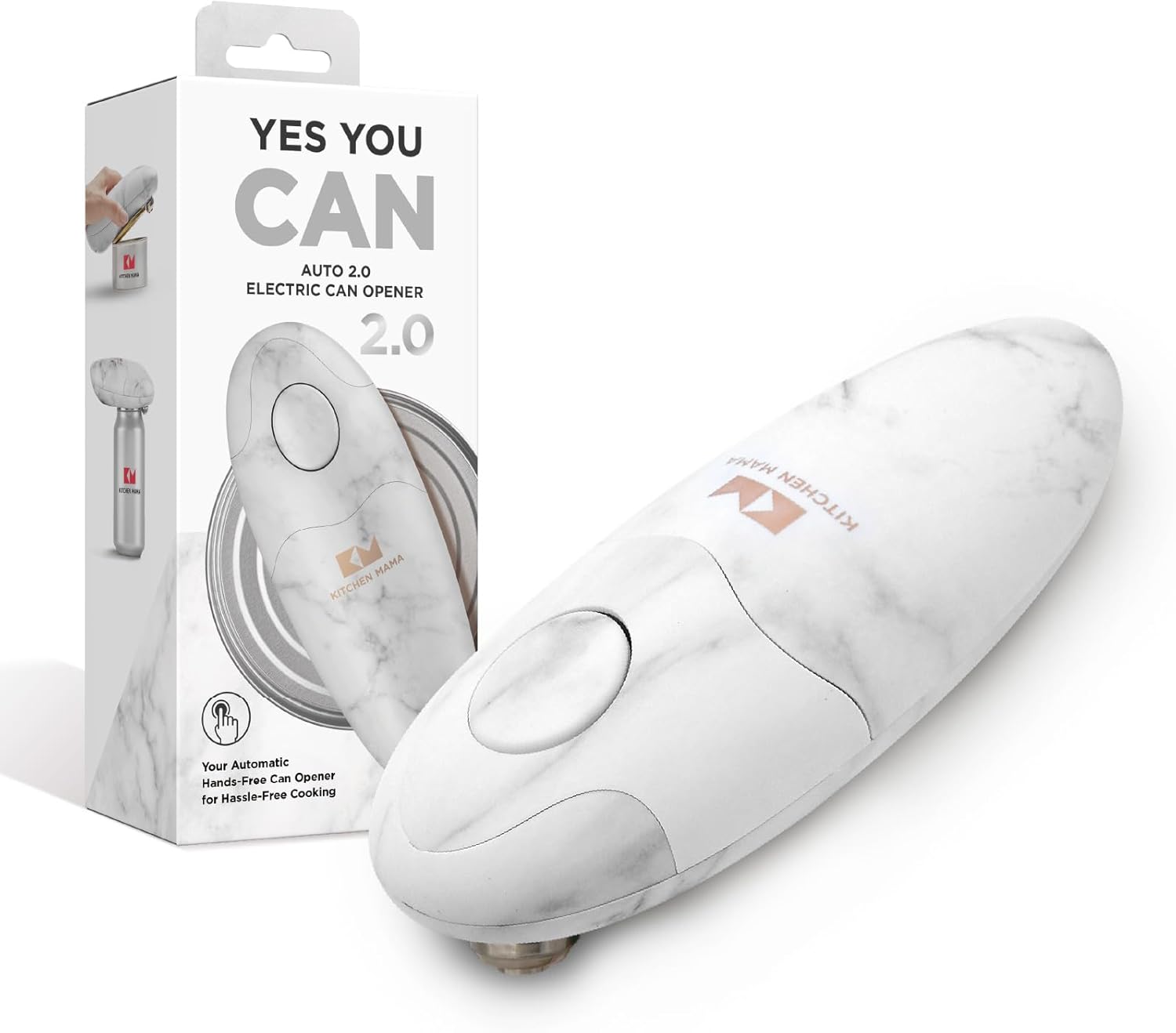 Kitchen Mama Auto 2.0Electric side: the hands-free walker that lives in a drawerCheck price on Amazon
 Swing-A-Way PortableManual side: the classic butterfly opener in steelCheck price on Amazon
 Swing-A-Way Easy-CrankManual side: the long crank that trades turns for leverageCheck price on Amazon
 OXO Good Grips Smooth EdgeManual side: the smooth-edge safety opener with lid pliersCheck price on Amazon
Prices move up and down on Amazon, so we never print a price here that could be stale by the time you read it. Use the price check button to see the current price.
Electric Can Opener vs Manual: The Key Differences
Hand effort is the dividing line, and it splits into two separate jobs. The first job is clamping: a butterfly opener only cuts while its handles stay squeezed together, so grip strength is spent for the whole turn, not just at the start. The second job is turning: a knob or crank has to travel the full rim, can after can. Electric openers delete the first job entirely and motorise the second. A crank design narrows the gap from the manual side by giving the turning hand a longer lever, and a smooth-edge manual design changes the angle of the cut, but neither removes the squeeze.
Lid edges refuse to follow the power divide. On this page the smooth lids come from one corded countertop machine, one battery walker and one manual safety opener, because all three cut along the side of the can. The sharp lids come from one corded machine and both traditional manual openers, because all three cut down through the top. Choose the edge first and the power source second, and half the page falls away cleanly. The wider framework for that choice sits in How to Choose an Electric Can Opener.
Readiness runs the other way. A manual opener is ready in the second it takes to open a drawer, in any kitchen, cabin or power cut. A corded electric opener is ready whenever its outlet is, but only where its counter spot is. A battery walker is ready only as far as its last battery swap or charge, which is a routine some households keep and some honestly do not. Before any opener earns a place here, its exact model was screened against the CPSC recalls page, a two minute habit worth copying before you buy any small kitchen tool.
| Point of difference | Electric can opener | Manual can opener |
|---|---|---|
| Hand work during the cut | A start press, then the motor turns the can | Handles held shut while the other hand turns |
| Lid edge | Smooth on side cut models, sharp on top cut models | Smooth on side cut models, sharp on top cut models |
| Power | Corded, replaceable batteries or rechargeable | None, your hands supply it all |
| Storage | A counter spot for corded machines, a drawer for walkers | A drawer, always |
| Works in a power cut | Corded and flat battery models do not | Yes, every time |
| Cleaning | A washable lever on one pick here, wipes on the rest | Hand washing and prompt drying on the steel picks |
| Failure mode | A worn motor, a flat battery, a gummed cutter | A dull wheel, rust after wet storage |
| Tall cans | Extra tall bodies and walkers handle them well | The can is steadied by your own hand |
The six openers below put figures on that split. Read the cut and cleaning columns together: they predict daily life with the tool more honestly than the power column does.
| Product | Side | Cut | Power | Size | Cleaning route | Lid handling |
|---|---|---|---|---|---|---|
| Hamilton Beach Smooth Touch | Electric | Side | Corded | 10.2 in tall | Wipe clean, never immerse | Smooth lid lifted by hand |
| Cuisinart Deluxe CCO-50BKN | Electric | Top | Corded | 9.4 in tall | Detachable lever, hand wash | Magnet holds the lid |
| Kitchen Mama Auto 2.0 | Electric | Side | 4 AA batteries | 7 in long | Wipe with a damp towel only | Underside remover for stuck lids |
| Swing-A-Way Portable | Manual | Top | Manual | 8.5 in long | Hand wash, dry at once | Lid lifted by hand |
| Swing-A-Way Easy-Crank | Manual | Top | Manual | 10.3 in long | Hand wash, dry at once | Lid lifted by hand |
| OXO Good Grips Smooth Edge | Manual | Side | Manual | 7.5 in long | Hand wash | Pliers grip the lid for removal |
The Electric Can Opener Options, in Full
Three powered designs that show the electric range honestly: a corded side cutter, a corded top cutter built around one touch, and a battery walker that asks nothing of your hands after one press.
Hamilton Beach Smooth Touch
Set a manual opener beside this machine and the contrast is the whole comparison in one object. Your hands place the can and push a large lever down; the motor does the turning that a manual design bills to your wrist, and the blade travels along the side of the can so both the lid and the rim finish smooth enough to touch without caution. The body stands 10.2 in tall, takes standard and pop-top cans, and stays corded, so there is no battery state to wonder about at dinner time. The lever stays down through the rotation, which is the one manual-like demand it keeps, and the exterior wipes clean rather than immersing. Buy it if counter room is available and a smooth lid from a standing machine is the goal. Skip it if the counter has no spare stretch near an outlet, where the walker further down gives up the footprint and keeps the smooth edge.
Pros
- Side cut leaves the lid and the rim smooth to handle
- Large lever starts the cut with a light downward push
- Extra tall body covers standard, tall and pop-top cans
- Corded power, ready whenever the outlet is
Cons
- Lever stays down through the turn, so one hand remains on duty
- Tall body claims a permanent counter spot
- Wipe clean care only, with no immersion
Cuisinart Deluxe CCO-50BKN
This machine answers the manual opener on familiarity. The cut runs inside the rim, exactly where a butterfly opener has always cut, but one press replaces the squeeze and the turning together: the blade bites, the can rotates, and the cutting halts on its own once the lid is free. Once cutting ends, the magnet holds the cut lid clear of what is inside, the wide footprint keeps the machine planted, and the activation lever lifts off entirely, which lets you hand wash the can-contact section in hot soapy water, a cleaning routine Cuisinart documents on the official Cuisinart CCO-50N product sheet, where this model's limited 3 year warranty also appears. The black finish is the version carried here. Every part that touches food is BPA free. Buy it if the traditional cut is the one you trust and cleaning the cutter properly matters to you. Skip it if smooth lids are the point of going electric, because this top cut keeps the familiar sharp edge on lid and rim alike.
Pros
- One press starts the cut and the machine stops by itself
- Activation lever detaches and washes by hand
- Magnet keeps the cut lid clear of the food
- Broad nonslip base, with a 3 year limited warranty
Cons
- Top cut leaves sharp edges on the lid and the rim
- Freeing the finished can takes a hand on the can and a hand on the lever
- Corded body needs its own counter spot
Kitchen Mama Auto 2.0
The walker is the electric answer to the manual opener's best argument, the drawer. It stores at about 7 in long and 8.4 oz, sits flat on the lid, and after a single button press it travels the rim alone while your hands rest or steady the can with a cloth. The tilted blade cuts from the side without touching the food, the lid comes away with no sharp edge, and a small remover underneath deals with lids that cling after cutting. The blade also copes with curved cans, soda cans among them. Power is four AA batteries, and stopping takes a second press rather than happening on its own. Cleaning is a damp towel and nothing wetter. Buy it if grip rules the decision and counter space is already spoken for. Skip it if a second press and a battery habit sound like friction, where a corded pick above asks for neither.
Pros
- One press, then the cut runs with your hands completely free
- Side cut with no sharp edge and no blade contact with food
- Underside remover frees lids that stick after the cut
- Drawer sized at 8.4 oz and works away from any outlet
Cons
- Four AA batteries needed and not included in the box
- A second press ends the cut, with no automatic stop
- Wipe clean only, never rinsed or submerged
The Manual Can Opener Options, in Full
Three hand powered designs across the real manual families: the squeeze and turn butterfly, the long crank built for leverage, and the side cutting safety pattern that removes the sharp lid without any motor at all.
Swing-A-Way Portable
This is the opener most kitchens already know, built properly in steel. Two cushioned handles squeeze together to bite the high-carbon cutting wheel into the top of the can, one hand holds that squeeze, and the other turns the steel knob while the skip-proof feed walks the wheel around the rim. The body measures 8.5 in, weighs 9.6 oz, carries a bottle opener on its side, and covers most cans without any setup beyond opening a drawer. Against any electric pick the trade is plain: total independence from power and a tool that shrugs off decades of drawer life, paid for with continuous grip through every turn. Care is hand washing in warm water with mild detergent and drying straight away. Buy it if your hands are up to the squeeze and you want the simplest durable answer. Skip it if holding a clamp shut while turning is exactly the motion that hurts, because no technique removes that demand from this design.
Pros
- All steel build with a high-carbon, skip-proof cutting wheel
- Cushioned handles sized to fit most hands
- Bottle opener built into the side
- No power, no batteries and no counter space, ever
Cons
- Handles stay squeezed for the whole cut
- Top cut leaves a sharp lid edge
- Hand wash and dry at once, or the steel suffers
Swing-A-Way Easy-Crank
The crank is the manual side's reply to the effort argument. Instead of a small knob pinched between finger and thumb, an extra-long crank handle gives the turning hand a lever to swing, so each rotation asks less of the wrist and fingers, while the extra-large cushioned grips handle the clamping side of the job. The construction is all steel at 10.3 in long and 14 oz, the gear driven high-carbon wheel feeds without skipping, the crank folds down for drawer storage, and a bottle opener is built in. It still cuts through the top and it still needs the handles held, so it narrows the effort gap rather than closing it. Washing is by hand, with drying straight after. Buy it if you prefer manual independence but want the easiest turn the manual side offers. Skip it if even a levered turn is too much on a bad day, where the electric walker's single press is the honest answer.
Pros
- Extra-long crank turns with less strain on the hand
- All steel body with a gear driven, skip-proof wheel
- Extra-large cushioned grips for the clamping hand
- Crank folds down, so the long body still stores in a drawer
Cons
- Handles still stay held shut through the cut
- Top cut leaves a sharp lid edge
- Longest manual pick here at 10.3 in, so drawer fit needs a check
OXO Good Grips Smooth Edge
This manual opener borrows the electric side's best trick and leaves the motor behind. It sits on top of the can and cuts along the side below the edge, so the lid lifts away whole with no sharp edge on lid or can, and the hardened stainless steel wheel keeps clear of the food inside. Built-in pliers grip the loosened lid for removal without fingers touching it, the oversized side-wind knob gives the turning hand a broad surface, and the soft nonslip handles suit a steady hold. At 7.5 in long it is the shortest pick on this page, and care is hand washing. The learning curve is the honest cost: seating a side cutter feels unfamiliar for the first few cans, and the design suits right-handed use. Buy it if sharp lids are your main complaint and your turning hand is willing. Skip it if the squeeze and turn themselves are the problem, because this design still bills both to your hands.
Pros
- Side cut leaves no sharp edge on the can or the lid
- Pliers lift the lid away without any finger contact
- Hardened stainless steel wheel stays clear of the food
- Oversized side-wind knob and soft nonslip handles
Cons
- Seating the side cut takes practice on the first cans
- Squeeze and turn still come from your own hands
- Built for right-handed use
Electric Can Opener vs Manual: Pros and Cons Side by Side
Electric can openers
Pros
- The motor supplies the turning work, so grip is spent briefly or not at all
- One touch and walking designs free both hands while the can opens
- Smooth lids are available from both a standing machine and a drawer sized walker
- Repetition is easy: the tenth can in a row asks no more than the first
Cons
- Corded designs claim counter room and an outlet, walkers claim a battery routine
- A flat battery or a failed motor stops the job completely, with no manual fallback in the same tool
- Cutters hide inside housings and levers, so cleaning takes more care than a rinse
- Moving parts and electronics give the tool a shorter natural life than plain steel
Manual can openers
Pros
- Ready the instant a drawer opens, in any kitchen and during any power cut
- Nothing to charge, plug in or feed with batteries, and nothing electronic to fail
- Simple steel designs can serve for decades with washing and prompt drying
- The cook feels the cut directly and can ease off, reseat or reverse at any point
Cons
- The squeeze and the turn are billed to your hands for the full rim, every can
- Traditional top cut designs leave a sharp lid to handle and dispose of
- A run of cans tires the clamping hand in a way a single can never reveals
- Steel wheels and gears rust when the tool is stored wet
Which Should You Choose
Choose electric if your hands set the terms
Choose the electric side if squeezing, holding or turning is painful, unreliable or simply tiring across a week of cooking. That is the ground our pillar guide works in depth, and readers who recognise themselves here should read Best Electric Can Opener for Seniors for the full field ranked on hand effort alone. Within this page, the walker asks the least, the one-touch countertop machine is next, and the held lever machine asks the most of the three.
Choose manual if cans are occasional and your grip is sound
Choose the manual side if a can appears a few times a week and your hands finish the job without thinking about it. A drawer tool with no power routine repays that kitchen every day, and the money and counter room stay unspent. The butterfly pick is the plain version of that choice, and the crank pick is the version for hands that want an easier turn without leaving the manual side.
Choose a smooth edge, on whichever side, if lids worry you
Choose by cut when the sharp lid is the real complaint. A side cut removes the hazard on both sides of this comparison: the Smooth Touch and the Auto 2.0 do it with motors, and the OXO Good Grips Smooth Edge does it with a side-wind knob and a set of lid pliers. A household with children helping in the kitchen, or anyone who has been cut by a lid before, should start from this verdict and let power come second.
Choose electric when the can count climbs
Choose electric when the can count climbs: holiday cooking, big soup sessions, pet food routines and any run where six cans wait in a row. Manual effort multiplies with every rim, while a motor repeats the same small effort until the last can is open. The corded picks suit that work best, because readiness never depends on a battery state.
Choose manual for small kitchens, cabins and travel
Choose manual when storage is the binding limit. For small kitchens the drawer beats the counter every time, and a manual opener also travels to cabins, campers and holiday rentals without a charger or an outlet hunt. The one electric exception is the walker, which stores like a manual tool and is the natural pick when drawer space and weak grip arrive in the same kitchen.
What Each Option Costs to Own
Running costs on both sides are small, and the shape of the spending differs more than the size of it. The tier question that sits behind this comparison, whether spending more inside the electric category changes what ownership costs, lands here in adapted form: inside the electric side, money mostly buys cut style, cleaning design and warranty length, while the month to month cost stays close to nothing on every model.
On the electric side, a corded machine spends pennies of electricity and asks for nothing else until its cutter dulls or its motor tires. A battery walker converts that near-zero cost into a battery habit, four AA cells at a time on the Auto 2.0 here, while rechargeable designs elsewhere in the category trade the battery shelf for a charging routine. Cutter care decides lifespan more than use does: a lever that washes, like the Cuisinart's, survives food residue that slowly ruins a fixed wheel. Readers holding a firm ceiling should read Best Electric Can Opener Under $25 for what the tight end of the electric side keeps and gives up.
On the manual side, ownership costs are close to zero and almost entirely about drying. A steel opener washed and dried at once can outlast the kitchen around it, while the same tool stored wet rusts at the wheel and gears. The crank and butterfly picks here share that rule, and the safety opener adds only the need to keep its pliers and wheel rinsed of food. Whichever opener you use, what happens after opening does not change: treat anything left in an opened can as perishable, and follow the USDA FSIS shelf-stable food safety guidance by transferring it to a clean glass or plastic container and putting that container in the fridge, instead of storing the food in the can itself, even when the lid looks smooth and resealable.
Also Considered
- Kitchen Mama Orbit One: a rechargeable walker with an automatic stop, a larger battery and blades sized for large cans. It missed the six because the Auto 2.0 covers the walker place with a simpler battery swap routine, and two walkers would crowd out a manual family.
- Hamilton Beach Classic Chrome: a heavyweight extra tall countertop machine with a removable cutting unit and an automatic shutoff. It missed the six because the Cuisinart already holds the corded top cut place with a washable lever and a longer warranty, and this page needed its electric places split across formats.
- Kuhn Rikon Auto Safety LidLifter: a Swiss side cutting manual opener with a lid lifter and a ring pull tool, at 8 in long. It missed the six because the OXO Good Grips Smooth Edge covers the safety place with an oversized side-wind knob and pliers in one design, and the two safety openers overlap heavily.
- Zyliss Lock N' Lift: a locking manual opener with a magnet that lifts the lid after a top cut. It missed the six because its locking handles answer the clamping problem only partly, while the Easy-Crank answers the turning problem more directly, and the manual side needed one clear pick per family.
When You Need Both, or Neither
Both is the settled state of many real kitchens, and it is not indecision. The electric machine handles the daily cans and the big cooking days, and the manual opener covers the power cut, the camping box, the second home and the can shape a machine refuses. Keeping the manual tool ready is mostly a drying habit, and the full routine for the electric half of the pair sits in How to Clean Electric Can Opener.
Neither is right when cans have mostly left your cooking. A kitchen built on fresh and frozen food, jars and pull-tab tins can leave the category alone entirely, borrow an opener on the rare occasion, and spend the drawer and the money on tools that work every week. The other honest neither is the household where a carer or partner opens every can already: duplicate tools help nobody there.
Electric Can Opener vs Manual: Frequently Asked Questions
What are the key differences between an electric and a manual can opener?
Effort, readiness and failure. An electric opener motors the turn and removes or reduces the clamping squeeze, then needs an outlet, batteries or a charge to do it again. A manual opener asks your hands for the squeeze and the turn on every can, and in exchange it is always ready, drawer stored and silent. Lid edges depend on the cut, not the power: side cut designs on both sides leave smooth lids, top cut designs on both sides leave sharp ones.
Which costs less to own, an electric or a manual can opener?
The manual opener, by a small but real margin. A steel manual tool spends nothing on power and lasts for decades when it is washed and dried promptly, so its lifetime cost is close to its purchase alone. A corded electric opener adds only pennies of electricity, while a battery walker adds a steady battery habit, and any electric design carries a motor and cutter that end its life sooner than plain steel ends its own.
For small kitchens, which fits your needs, electric or manual?
Manual, unless grip argues the other way. Every manual pick here lives in a drawer and asks for no counter, no outlet and no charging corner, which is the whole game in a small kitchen. The exception is the battery walker, which stores in the same drawer while removing the hand effort, so a small kitchen with weak hands should choose the walker over both the countertop machines and the traditional manual designs.
Can an electric can opener replace a manual one?
For daily cooking, yes, and many kitchens retire the manual tool to a backup drawer without missing it. The replacement is not total: an electric opener cannot help in a power cut, a flat battery walker opens nothing until it is fed, and an odd can shape or a dented rim can defeat a machine that a patient hand would work around. Keeping one inexpensive manual opener as the understudy is the practical version of the swap.
Which lasts longer, an electric or a manual can opener?
The manual opener, and the gap is structural. A steel butterfly or crank opener has a wheel, a gear and a hinge, each of which survives years of washing and drying, while an electric opener adds a motor, gearing and, on walkers, a battery that ages whether it is used or not. Care narrows the gap: a washable electric cutter that is actually washed outlasts a neglected one by years, and a manual opener stored wet can rust out faster than a looked after machine.
Keep Researching This Electric Can Opener
the main guide for this product, where the strongest electric openers are ranked on lever force, smooth lids and hands-free cutting.
Budget BuyingBest Electric Can Opener Under $25the electric shortlist at the tight end of the market, for readers whose next question is what a small budget still buys.
How to ChooseHow to Choose an Electric Can Openerthe full framework for cut styles, starting and stopping, power choices and cleaning routes before you spend.
Use & CareHow to Clean Electric Can Openerremoving levers and cutting assemblies, washing what detaches, wiping what does not, and drying a cutter so it stays sharp.
More in Kitchen & Cookware
Kitchen & CookwareAll Pick Hearth guides in this categoryHow We Check Comparisons Like These
Read the full Pick Hearth methodology- Every opener on both sides was checked against its maker's own published specifications: cut position, power source, dimensions and cleaning route here all trace to a listing or maker document recorded for this comparison, with the manual families verified one model at a time.
- Verdicts follow the verified differences, not brand or price: the electric verdicts rest on hand effort, stopping behaviour and cleaning design, the manual verdicts on leverage, cut style and steel construction, and where a manual design borrows the other side's best trait, as the side cutting safety opener does, this guide credits it plainly.
- No brand can pay for a place, and affiliate earnings never change a verdict: the six representatives were chosen to span the genuine families on each side, every model was screened against CPSC recalls before picking, and the colourway overlap inside the electric pool was resolved by carrying a single version of the shared model.
First published · Updated in place as products and specs change