The short answer
If pet hair is your daily problem, frequency beats force. Hair lands every day, and a robot that runs every day never lets it mat into carpet or gather along skirting boards, while a stronger machine used once a week spends that week losing. That is why the robot side of this guide leads with anti-tangle brushes and self-empty docks: they are what make daily running effortless enough to actually happen.
If your home has stairs, deep carpet, upholstery that sheds into, or one big weekly clean you want done properly in a single pass, the regular vacuum is still the main machine. No robot here climbs a step, lifts a sofa cushion or agitates pile the way a full size brush head on a cord can, and the regular picks below cover the three shapes that work takes: a corded upright, a cordless stick and a bagged canister.
Many homes honestly need the first paragraph five days a week and the second paragraph on the sixth, which is why the both and neither section near the end matters. Start with the machine that matches your most common day, not your worst one.
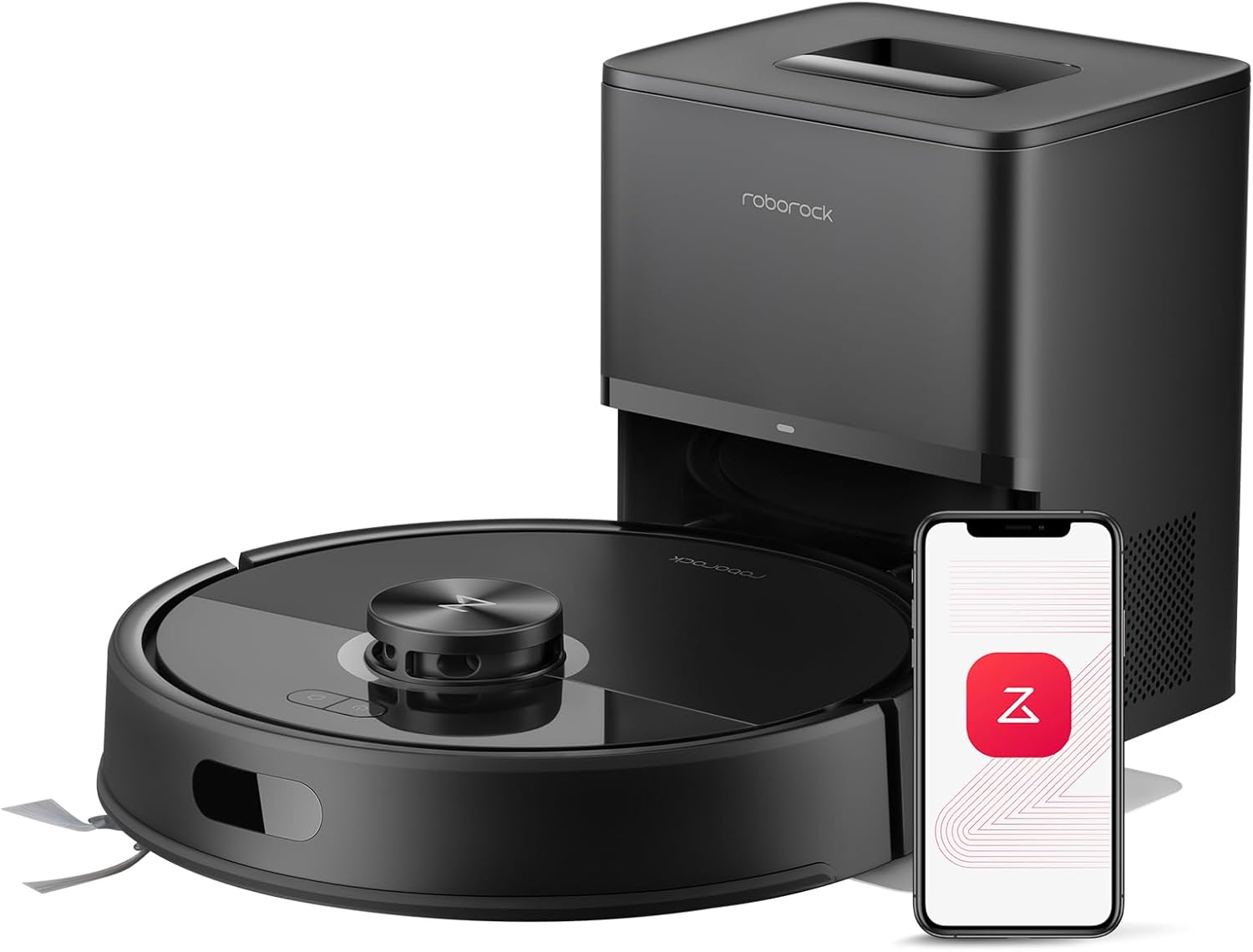 Roborock Q7 M5+Robot side: best all-round robotCheck price on Amazon
 Shark AV2501AE AI Robot VacuumRobot side: best HEPA base for allergy homesCheck price on Amazon
 Lefant M310Robot side: best slim robot for small apartmentsCheck price on Amazon
 Shark Navigator Lift-Away Deluxe NV360Regular side: corded upright for deep cleansCheck price on Amazon
 Dyson V8Regular side: cordless stick for stairs and quick cleansCheck price on Amazon
 Kenmore 81614 600 Series Canister VacuumRegular side: bagged canister for allergy homesCheck price on Amazon
Prices move up and down on Amazon, so we never print a price here that could be stale by the time you read it. Use the price check button to see the current price.
Robot Vacuum vs Regular Vacuum: The Key Differences
One honest point about the wording of this comparison first. There is no corded robot vacuum to set against a cordless one: every robot vacuum is a battery machine that cleans for a stated runtime, then returns to its dock to charge. The cordless versus corded choice is real, but it lives in two other places. It is the runtime limit on the robot side, 160 to 180 minutes on the picks here against no limit at all on a corded machine, and it is the stick versus upright choice on the regular side, where the Dyson V8 trades a 40 minute battery for freedom from the socket the Shark and Kenmore cords demand.
| Point of difference | Robot vacuum | Regular vacuum |
|---|---|---|
| What it is and how it works | A low, self-driving disc that vacuums one level on a schedule, navigating by LiDAR, laser or sensors, then recharges itself at a dock | A machine you push or carry: an upright you walk behind, a stick you grab, or a canister body that follows you on a hose and wand |
| What it does best | Frequent, hands-off upkeep: daily pet hair, crumbs and dust on hard floors and low pile, including under sofas and beds | Deep, directed cleaning: carpet pile worked in one pass, stairs, edges, upholstery, mattresses and above-floor dusting with tools |
| What it cannot do | Climb stairs or level changes, clean upholstery or curtains, reach above floor level, or deep clean thick pile in one pass | Clean while you are out, run itself daily, or reach under low furniture without you crouching with a tool |
| Power and running limit | Battery only: 160 to 180 minutes on the robots here, then a recharge; suction stated in pascals by most makers | Corded models run without limit; a cordless stick runs about 40 minutes here; power stated in watts, amps or air watts |
| Running costs and consumables | Dock bags on bagged models, filters, side and main brushes, mop pads where fitted | Bags on bagged models, filters, belts and brush rolls; no dock consumables |
| Footprint and storage | A dock needs a clear patch of floor by a socket; the robot stores itself under furniture | An upright or canister needs cupboard or corner space; a stick can hang on a wall mount |
| Upkeep | Empty the bin or dock, clear the brush, wash or change filters, wipe sensors | Empty the cup or change the bag, wash or change filters, clear the brush roll |
| Who it suits | Pet homes wanting daily hair control, hard-floor homes, small apartments, anyone who will not vacuum often by hand | Homes with stairs and deep carpet, allergy homes wanting sealed deep cleans, anyone who prefers one thorough weekly clean |
A second honesty note belongs with the table below. Suction figures are not one shared scale. Roborock and Lefant state pascals, Dyson states air watts for the V8, Shark states watts and amps for the upright, and Kenmore states amps. Each figure is its maker's own, and none of them can be ranked against another maker's figure. What can be compared fairly is design: brush type, bin or bag size, filtration standard, runtime and weight. The full framework for reading those figures sits in How to Choose a Robot Vacuum.
| Product | Side | Suction or power | Runtime or cord | Dustbin, bag or base | Filtration | Height or weight |
|---|---|---|---|---|---|---|
| Roborock Q7 M5+ | Robot vacuum | 10000 Pa | 180 mins battery | 2.7L bag in self-empty dock, up to 7 to 9 weeks | An E11 filter that rinses clean | 3.8 in tall |
| Shark AV2501AE AI Ultra | Robot vacuum | No Pa figure published | 120 mins battery | Bagless XL self-empty base, 60 days before it needs emptying | True HEPA in base, 99.97% of particles down to 0.3 microns | Dock model, height not given |
| Lefant M310 | Robot vacuum | 4500 Pa | 160 mins battery | 550 ml bin, only a charging dock | A HEPA filter | 2.99 in tall |
| Shark Navigator Lift-Away Deluxe NV360 | Regular vacuum | 1200 watts, 10 amps | a 25 ft cord, so it runs as long as you like | A 0.9L dust cup with no bag | HEPA with Anti-Allergen Complete Seal | 15.96 lb |
| Dyson V8 | Regular vacuum | 115 AW | A battery, up to 40 mins | A 0.14 gallon (0.54L) bin with no bag | Whole-machine HEPA filtering | 5.6 lb |
| Kenmore 81614 600 Series | Regular vacuum | a system of 2 motors, 12 amps | a 28 ft cord that retracts, so it runs as long as you like | Takes bags: Style Q HEPA cloth bags | Triple A HEPA filter, 99.97% of particles down to 0.3 microns | 22.6 lb |
The robot vacuum options, in full
Each review works from the checkable specifications: published suction, runtime, navigation, bin and base capacity, filtration and height.
Roborock Q7 M5+
The Q7 M5+ is the robot case at its strongest. Its JawScrapers main brush combs hair off itself as it cleans, the 2.7L dock bag turns emptying into a handful-of-times-a-year job, and PreciSense LiDAR maps rooms for systematic daily runs. Suction is stated at 10000 Pa with automatic carpet boost, runtime reaches 180 minutes, and a VibraRise pad wipes hard floors after vacuuming. Against a regular vacuum it still cannot climb, reach or deep clean pile, but for daily hair it asks almost nothing of you. Buy it as your main floor keeper on one level. Skip it if your home is stairs and deep carpet, where the regular picks below do the real work.
Pros
- 10000 Pa suction with carpet boost
- Dual Anti-Tangle brush system with a self-combing main brush
- 2.7L dock bag holds up to 7 to 9 weeks of hair
- LiDAR mapping with a 180 minute runtime
Cons
- One level only, with no stairs, upholstery or above-floor reach
- Dock bags are an ongoing purchase
- The mop pad wipes hard floors rather than scrubbing them
Shark AV2501AE AI Robot Vacuum
The gap between weekly cleans is where this robot earns its place against a regular vacuum. Pet dander settles daily, and the Shark answers with frequency plus filtration: it runs LiDAR Matrix Clean grid passes with recharge and resume for 120 minutes, a self-cleaning brushroll resists hair wrap, and everything it collects lands in a bagless XL base. That base holds up to 60 days and filters through true HEPA, capturing 99.97% of dust and allergens down to 0.3 microns, with no bags to buy. Buy it for daily dander control without bag costs in an allergy home. Skip it if you want a published suction figure, because Shark does not publish a Pa figure for this model, or if stairs and upholstery are your main problem.
Pros
- True HEPA base holds back 99.97% of particles down to 0.3 microns
- Bagless 60 day base, so no bags to reorder
- Self-cleaning brushroll resists hair wrap
- Matrix Clean grid passes, with recharge and resume
Cons
- No published suction figure to compare
- 120 minute runtime is the shortest on the robot side here
- The bagless base means dust contact at emptying time
Lefant M310
Ownership, not navigation, is the decision with the M310. There is no self-empty dock and no stored map, so the generous 550 ml bin is yours to empty by hand, and in return the robot stays simple enough to run daily in a small flat. It picks up through a brushless suction mouth at 4500 Pa, with no roller to wrap, and HEPA filtration catches dander and pollen. At 2.99 inches tall it slides under sofas and beds that stop the LiDAR robots here, and PreciSense sensors steer it through Auto, Spot, Edge and Zig-zag modes for 160 minutes. Buy it for a flat where daily hair control matters most. Skip it for carpeted, multi-room homes, where the regular picks and the mapping robots above earn their keep.
Pros
- 2.99 in body fits under low furniture
- Brushless suction mouth, so hair cannot wrap
- 550 ml bin with HEPA filtration
- PSD obstacle avoidance with four cleaning modes
Cons
- No mapping or room targeting
- No self-empty option, so the bin is emptied by hand
- Suction-port pickup cannot agitate carpet pile
The regular vacuum options, in full
Each review works from the checkable specifications: type, rated power, cord or battery limit, bag or bin capacity, filtration and weight.
Shark Navigator Lift-Away Deluxe NV360
The NV360 is the deep clean argument in one machine. A 1200 watt corded motor never fades or needs charging, the brush head works carpet pile in one directed pass, and the Lift-Away pod lifts off with a hose and tools for stairs, upholstery and edges, the jobs every robot here leaves undone. Filtration is a HEPA filter inside an Anti-Allergen Complete Seal system, and the bagless cup empties with no bags to buy. At about 16 lb it is a push and plug machine, not a grab and go one. Buy it as the main cleaner for carpeted, multi-room homes. Skip it if you want the cleaning to happen while you are out.
Pros
- Corded power with no runtime limit and no battery to fade
- Lift-Away pod with hose and tools for stairs and upholstery
- HEPA filter with Anti-Allergen Complete Seal
- Bagless cup, so there are no bags to buy
Cons
- About 16 lb to push, carry and store
- The 25 ft cord means moving between sockets in larger homes
- It only cleans when you do
Dyson V8
The V8 is the regular side answering the robot on convenience. At 5.6 lb it grabs in seconds for stairs, edges, upholstery and the car, converts to a handheld, and its Motorbar head de-tangles wrapped hair as you clean, so brush clearing mostly disappears. Whole-machine HEPA filtration traps 99.99% of particles as small as 0.3 microns, and Dyson states 115 AW of suction across two power modes. The honest limits are the 40 minute battery, which is a ceiling on whole-home deep cleans, and the small 0.54L bin. Buy it for stairs, quick cleans and homes where a robot cannot reach. Skip it as your only machine for large carpeted homes, where the corded picks run without a clock.
Pros
- 5.6 lb stick that converts to a handheld for stairs and upholstery
- Motorbar head de-tangles hair as it cleans
- Whole-machine HEPA filtration, 99.99% down to 0.3 microns
- No cord, so room to room is instant
Cons
- 40 minute battery caps a whole-home clean
- 0.54L bin fills quickly in a shedding home
- A 5 hour recharge between full runs
Kenmore 81614 600 Series Canister Vacuum
The Kenmore is the allergy and above-floor case for the regular side. Dirt seals into a HEPA cloth bag inside a Triple HEPA system capturing 99.97% of debris down to 0.3 microns, so emptying never puffs dander back into the room. A two-motor system drives the floor head and the Pet PowerMate, a small motorised brush for upholstery and stairs, while the aluminium telescoping wand stretches reach to 10 feet. The 28 ft cord retracts at a button press. At 22.6 lb it is the heaviest pick here, though the body trails behind you rather than lifting. Buy it for allergy homes with stairs and mixed floors. Skip it if you dislike buying bags, or want anything cleaned without you.
Pros
- Sealed bagged capture, so disposal never releases dander
- Triple HEPA filtration, 99.97% down to 0.3 microns
- Pet PowerMate motorised brush for upholstery and stairs
- 28 ft retractable cord and a 10 ft wand reach
Cons
- Bags are an ongoing purchase
- 22.6 lb, the heaviest pick in this guide
- The canister body needs floor space to follow and store
Robot Vacuum vs Regular Vacuum: Pros and Cons Side by Side
Robot vacuum
Pros
- Cleans daily on a schedule, so pet hair never builds into a layer
- Hands-off by design: it starts, navigates, empties into a dock on two picks here, and recharges itself
- Reaches under sofas and beds at 2.99 to 3.8 inches tall, where hair gathers unseen
- Quiet, small-footprint upkeep that suits flats and busy homes
Cons
- One level only: no stairs, no upholstery, no above-floor cleaning at all
- Small onboard bins, 550 ml on the M310, so dockless models need frequent emptying
- Battery runtimes of 120 to 180 minutes cap each run, and pile is wiped or lightly worked, not deep cleaned
- Brushes, filters, sensors and dock bags all need regular care to keep pickup honest
Regular vacuum
Pros
- Deep, directed power: a corded brush head works carpet pile in one pass, with no battery ceiling on the Shark and Kenmore
- Stairs, edges, upholstery, mattresses and ceilings are all reachable with a hose, wand and tools
- Larger capacity per clean, from the 0.9L Shark cup to sealed Kenmore bags you change far less often than a robot bin
- Simple, mature machines: no maps, apps, docks or sensors to maintain
Cons
- It only cleans when you do, so hair builds between your weekly sessions
- Heavier work: about 16 lb for the upright and 22.6 lb for the canister, against a robot you never push
- Storage and setup: cupboard space for the upright and canister, sockets and cords to manage
- The cordless exception, the V8, swaps the cord for a 40 minute battery and a small bin
Which should you choose: verdicts by use case
Pet hair, every day
Choose a robot vacuum if hair lands daily and your floors are mostly one level. Frequency is the whole answer here: the Q7 M5+ combs hair off its own brush and seals it into a dock bag for weeks at a time, while the Shark base holds 60 days bagless. A regular vacuum used twice a week cannot match a machine that quietly removes one day of shedding every day. The full pet-hair field, including premium docks and camera avoidance, is compared in Best Robot Vacuum for Pet Hair.
Hardwood floors
Choose a robot vacuum if your home is mostly wood, laminate or tile. Hard floors show every hair, and they reward exactly what robots do: gentle daily passes, suction ports and rubber brushes that gather hair instead of scattering it, plus a wipe from a mop pad for paw prints. Choose a regular vacuum instead if your hard floors sit alongside deep rugs and stairs, where the robot would leave half the home to you anyway.
Small apartments
Choose a robot vacuum if space and time are both tight. The Lefant M310 needs only a small charging base in a corner, stands 2.99 inches tall for low sofas, and covers a flat many times over on 160 minutes. Choose a regular vacuum if your flat has no clear patch of floor for even a small dock, or if one cupboard and a wall-mounted V8 at 5.6 lb is genuinely all the storage you can give cleaning.
Stairs, edges, upholstery and deep carpet
Choose a regular vacuum if any of those four words describe your home. Robots stop at the first step and have no hose, no wand and no tools. The Kenmore answers with a Pet PowerMate for upholstery and stairs and a 10 foot wand reach, the Shark upright lifts its pod away for the same jobs, and the V8 converts to a handheld at 5.6 lb. On deep carpet, a corded brush head agitates pile in one pass in a way no robot here claims to match.
Allergy sufferers
Choose a regular vacuum if allergies are the deciding factor and carpet is in the mix. The strongest single answer is sealed capture plus deep cleaning: the Kenmore seals dirt into a HEPA cloth bag inside a Triple HEPA system, and the Shark upright seals its HEPA filter behind an Anti-Allergen Complete Seal. Choose a robot vacuum as your daily support if dander builds on hard floors between cleans, where the Shark robot base filters to true HEPA standard at every self-empty, and weigh bagless emptying carefully, because a bagless base or cup opens to the room when emptied while a sealed bag does not.
What each option costs to own
Neither side is free to run, but they bill you in different places. A robot vacuum spreads its costs across small, frequent consumables: dock bags every one to three months in a shedding home on bagged models like the Q7 M5+, filters on every model, side brushes and main brushes on the published schedule, and mop pads where fitted. Bagless docks like the Shark base remove the bag line and replace it with filter care. Batteries are the long-term item: a robot or a cordless stick that loses runtime over the years eventually needs a battery decision, while a corded machine has no battery to age.
A regular vacuum concentrates its costs in fewer, larger intervals. The Kenmore needs its Style Q HEPA bags and an exhaust filter on schedule, the bagless Shark and Dyson need filter washing and eventual replacement, and uprights and canisters add belts and brush rolls over a long life. There is no dock, no app hardware and no sensor suite to fail. If you are weighing the robot side on a tight purchase budget as well as running costs, Best Robot Vacuum Under 300 tracks the models that keep the pet features and drop the expensive stations. On balance, a corded regular vacuum is usually the cheaper machine to own over its life, and a robot is the one that charges you steadily for the time it saves you.
Also considered
Dreame D10 Plus Gen 2 (B0D6TTRTPL), robot vacuum: A 6000 Pa LiDAR robot whose 4L dock bag stretches emptying to up to 90 days, held back here only because the Q7 M5+ covers the bagged-dock slot with stronger stated suction and a self-combing brush.
iRobot Roomba 105 Vac with AutoEmpty Dock (B0DWG1K24K), robot vacuum: A 7000 Pa Roomba whose dock bag holds up to 75 days and traps 99% of allergens as small as 0.7 microns, held back because its standard bristle brush has no anti-tangle system.
Bissell Zing Bagless Canister 2156A (B075PL2GDD), regular vacuum: A corded bagless canister of only 7.5 lb with a 2L dirt tank, held back because it has no powered brush head, so it cannot make the deep-carpet case the regular side needs.
Kenmore 81214 200 Series (B075F4YTVF), regular vacuum: A lighter bagged canister with the same HEPA capture family as the 600 Series, held back because the 600 Series adds the Pet PowerMate and the longer 28 ft cord in the same slot.
When you need both, or neither
For a pet home with stairs or carpet, the honest answer is often both: a robot for daily upkeep on the main level, where hair lands and hard floors show it, and a regular vacuum for the weekly deep clean, the stairs, the sofa and the edges. That pairing is why so many pet homes end up owning one of each rather than choosing a winner. You need neither upgrade if your current setup already matches your floors: a small hard-floor flat served well by a stick you actually use, or a single-level home where a robot already keeps on top of things and deep cleans are rare. Spend first on the gap you feel weekly, not on the category you feel you should own.
Robot Vacuum vs Regular Vacuum: Frequently Asked Questions
Can a robot vacuum replace a regular vacuum?
For a single-level home with hard floors or low pile and light to moderate shedding, it can come close, provided it runs daily and empties into a dock. It cannot replace a regular vacuum where stairs, upholstery, deep pile or above-floor dusting matter, because it has no hose, no tools and no way to climb. Note that the swap is sometimes asked the other way around, as a corded machine replacing a cordless one: there is no corded robot vacuum, since every robot is a battery machine, so the real choice is robot versus regular, not cord versus battery within robots.
Which is easier to use, a robot vacuum or a regular vacuum?
Day to day, the robot: you schedule it, and the work is reduced to emptying a dock or bin, clearing the brush and following a simple care routine like the one in How to Clean a Robot Vacuum. A regular vacuum is easier to understand, with nothing to map or connect, but every clean is your time and effort. The cordless stick sits between the two: instant to grab, but still entirely manual.
Which lasts longer, a robot vacuum or a regular vacuum?
A corded regular vacuum has fewer ageing parts: no battery, no navigation sensors and no dock electronics, so a well kept upright or canister commonly outlasts a robot. Robot life is decided by battery health and consumable care, since filters, brushes and batteries age on published schedules. No maker publishes a verified lifespan figure for either side, so treat any exact year claim with care and judge by how replaceable the wear parts are.
Robot vacuum or regular vacuum for hardwood floors: which fits your needs?
For mostly hardwood, a robot fits best as the daily machine, because hair and grit show immediately and daily passes stop both, while suction-port and rubber-brush models gather hair without scattering it. Keep or choose a regular vacuum alongside it if you want a weekly once-over for edges and rugs, where a hose and crevice tool beat a robot's side brush. Deep carpet reverses the verdict: the regular vacuum becomes the main machine and the robot the support act.
Who should choose a robot vacuum over a regular vacuum?
Choose a robot if your home is one level, your floors are hard or low pile, hair or dust builds daily, and you know you will not vacuum by hand more than once a week. Choose a regular vacuum instead if stairs, deep carpet, upholstery or allergy-grade deep cleans define your cleaning, or if you prefer one thorough session you control. The cordless versus corded version of this question only applies on the regular side: pick the cordless stick for grab-and-go cleaning across levels, and the corded upright or canister for unlimited runtime in one session.
Keep researching this robot vacuum
The full pet-hair guide, with premium docks, camera avoidance and the strongest brushes at every level.
Budget BuyingBest Robot Vacuum Under 300Pet-capable robots that keep the hair handling and drop the expensive docks.
How to ChooseHow to Choose a Robot VacuumThe sizing, navigation and bin maths behind every pick here.
Use & CareHow to Clean a Robot VacuumBrush, filter and dock care that keeps suction honest in a pet home.
How we check comparisons like these
Read the full Pick Hearth methodology- Both sides checked against the manufacturers' stated specifications: every robot and every regular vacuum here was verified against its own Amazon listing and, where a figure mattered, its maker's product page or manual.
- Verdicts follow the verified differences, not brand or price: suction depth, stairs and tool reach against frequency, runtime and hands-off emptying, with each maker's power figure printed in its own units and never ranked across makers.
- No brand can pay for a place, and affiliate earnings never change a verdict: the six representatives were chosen to show the genuine range of each side, and products that failed verification were replaced and logged.
First published · Updated in place as products and specs change