Our top picks at a glance
Most of the electric picks settle on the same 6 quart size, while the four stovetop pots cost less than any of them and leave the burner work and the clock watching to you. The Instant Pot Duo is the natural first look: a stainless pot with nothing to wear out, a proper spread of functions and keep warm at the end of every cycle. The Duo Plus is the same idea with a few genuine upgrades that happen to sit in band right now, sous vide and a gentler steam release among them. The COSORI is the pick when scrubbing stuck rice or beans off stainless has put you off pressure cooking before, because its ceramic pot wipes clean and its release valve points away from your hand.
Below those three, the guide splits by problem. The COMFEE is the cheapest full size electric we could verify in band, the Midea is the only 8 quart electric here and feeds a crowd from a stainless pot, and the RIO Mini shrinks the electric format to 4 quarts for small households. The four stovetop pots then take over for buyers who would rather own steel and a regulator than electronics: the KOCH SYSTEME CS brings three pressure settings and a one press lid, the two Prestos cover the classic American pattern in aluminum and in small stainless, and the Hawkins Futura is the hard anodised pan shaped cooker that generations of dal and curry cooks swear by.
Before the cards, one point applies to every pick that follows. At this level the pot material decides your running costs. Stainless pots are effectively permanent, coated pots are consumables with a longer fuse, and every electric here will eventually want a fresh sealing ring. Buy the pot you are willing to maintain and this budget is genuinely enough.
 Instant Pot DuoBest overall under the capCheck price on Amazon
 Instant Pot Duo PlusBest step up still in bandCheck price on Amazon
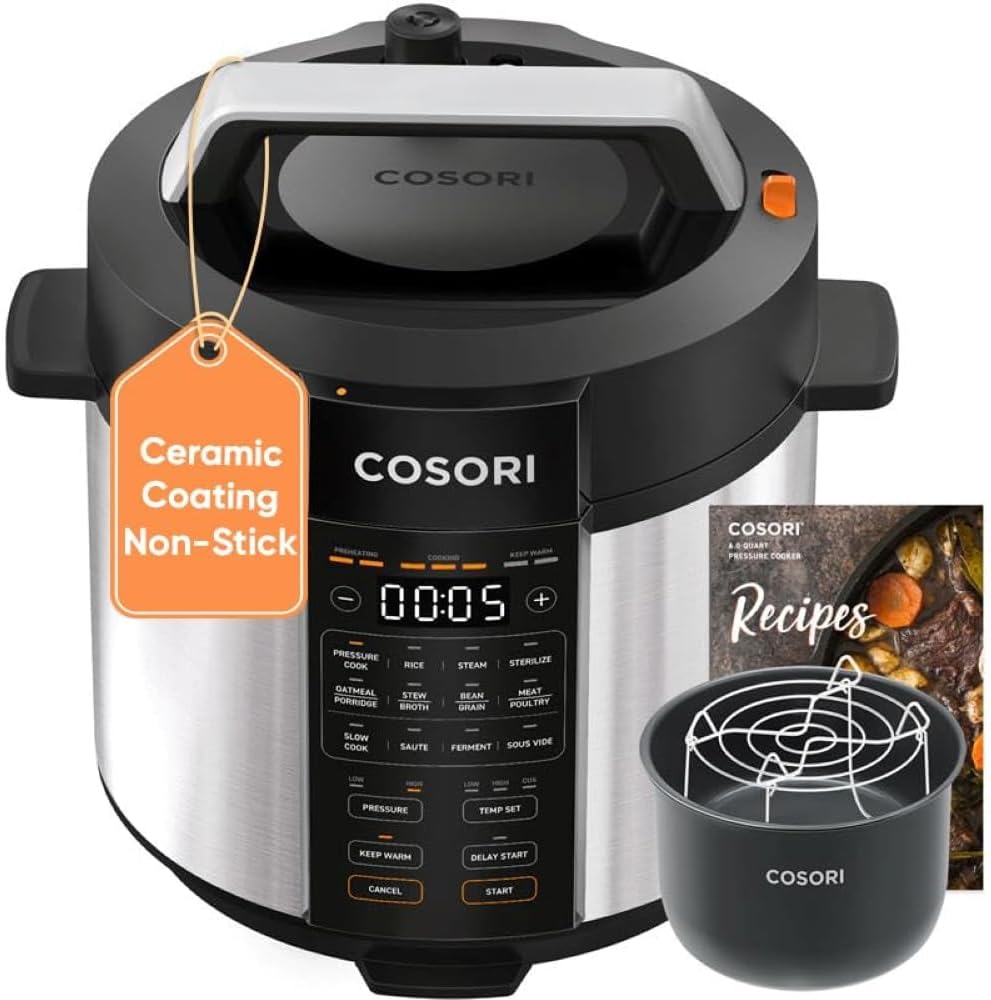 COSORI Pressure CookerBest ceramic pot under the capCheck price on Amazon
 COMFEE 12-in-1 Pressure CookerBest low-cost electricCheck price on Amazon
 Midea 12-in-1 Electric Pressure CookerBest big electric for familiesCheck price on Amazon
 Instant Pot RIO MiniBest compact electricCheck price on Amazon
 KOCH SYSTEME CS Pressure CookerBest stainless stovetop with pressure settingsCheck price on Amazon
 Presto 6-Quart Aluminum Pressure CookerBest value stovetopCheck price on Amazon
 Presto 4-Quart Stainless Steel Pressure CookerBest small stainless stovetopCheck price on Amazon
 Hawkins FuturaBest hard anodised pan cookerCheck price on Amazon
Prices move up and down on Amazon, so we never print a price here that could be stale by the time you read it. Use the price check button to see the current price, and treat a pick that has drifted over the cap as a pick to wait on, not to stretch for.
The Best Pressure Cookers Under 100, Reviewed in Full
Instant Pot Duo
On a fixed budget the Duo is the cooker that wastes none of it. What you are paying for is substance: a stainless steel pot in the 6 quart size that never needs recoating or swapping out, 1000 watts of heating matched to that capacity, and a seven function set built around ordinary weeknight cooking (pressure cooking, slow cooking, rice, sautéing, steaming, yogurt and warming), backed by thirteen customisable programs on the panel. Keep warm switches on by itself when a cycle ends, which is the feature budget buyers actually use daily. What the price leaves out is refinement rather than substance: the steam release is a valve you turn by hand, there is no sous vide, and the display is plain. None of that changes a pot of beans. Buy it if you want one electric cooker that will still be working, with its original pot, years from now. Skip it for a one or two person household, where the RIO Mini below does the same jobs in a smaller pot.
Pros
- Stainless pot, so there is no coating to peel or replace
- Seven functions and thirteen customisable programs
- Automatic keep warm after every cycle
- 1000 watt element matched to the 6 quart pot
Cons
- Manual steam release valve rather than a switch
- No sous vide or sterilize function at this level
- Plain display with no progress indicator
Instant Pot Duo Plus
The Duo Plus is the mid range Instant Pot that discounting keeps pulling inside this budget, and while it sits in band it is the better buy of the two. Against the Duo it gains two whole jobs, sous vide and sterilizing, taking the function count to nine; its fifteen smart programs broaden the preset range further; and venting is handled by a switch positioned clear of the steam path, letting pressure escape more softly and with less spray than the standard valve. The 6 quart pot is the same stainless steel, coating free design as the Duo's, sized for up to six servings, so the upgrade money buys control and convenience rather than a different cooking result. The catch is the price itself: this model lives above the cap at its full figure and only visits this guide when discounted, so the check matters more here than anywhere else in the ten. Buy it if the current price sits under the cap when you look, because at that point it out features everything else here. Skip it at full price without a second thought, and take the Duo instead.
Pros
- Nine functions including sous vide and sterilize
- Switch style steam release, quieter and set away from the vent
- Fifteen smart programs on a clear panel
- Same coating free stainless pot as the Duo
Cons
- Only in band when discounted, so the price needs checking
- Same 6 quart capacity as the cheaper Duo
- Extra programs overlap heavily with the base set
COSORI Pressure Cooker
The COSORI spends its budget on the two things stainless pot owners complain about: cleaning and steam. Inside the 6 quart body sits a ceramic-coated pot, and that surface is why stuck beans, oatmeal and rice come away under a cloth rather than after hours soaking in the sink. Steam leaves through a vent tilted 30 degrees toward the back of the lid, operated from a control placed well away from the jet itself, a layout the official COSORI pressure cooker page sets out alongside its lid lock and safety systems. Working pressure runs in two published bands, gentler on low for eggs and vegetables, firmer on high for beans and tough cuts, and the function set is wide for the money: pressure cook, rice, steam, sterilize, oatmeal and porridge, stew and broth, bean and grain, meat and poultry, slow cook, sauté, ferment, sous vide and keep warm from an 1100 watt element. COSORI covers the cooker with a 2 year limited warranty. Buy it if easy release and a calmer valve matter more to you than a pot that lasts forever. Skip it if you cook with metal utensils daily, because the coating asks for wood, silicone or plastic.
Pros
- Ceramic-coated pot releases beans and grains without soaking
- Steam vent tilts backward, clear of the hand that works it
- Two working pressure bands, gentle and firm
- 2 year limited warranty
Cons
- Ceramic surface eventually wears, and a replacement pot is not free
- Non-metal utensils only around the pot
- Wide function set takes a few cooks to learn
COMFEE 12-in-1 Pressure Cooker
The COMFEE is what the bottom of the electric market looks like when it is done properly. Twelve functions run through a panel of named presets, rice, soup and broth, meat stew, bean chili, steam, sauté, oatmeal, slow cook and yogurt among them, a 24 hour delay timer lets a pot of beans start before you get home, and keep warm holds the result. The capacity is the full 6 quarts, so nothing about the format is miniaturised to hit the price. One thing deserves a flag before the praise: the pot inside this cooker is described in conflicting ways, with ceramic coated in one place and plain nonstick in another, so open the box and confirm what you actually received while returning it is still easy. Either way it is a coated pot, with the gentle utensils and eventual replacement that coatings involve. Buy it if you want the electric format at the lowest verified cost in this guide and you accept a coated pot as the trade. Skip it if a stainless pot is non-negotiable, where the Duo and the Midea answer instead.
Pros
- Full 6 quart electric format at the lowest cost here
- Twelve functions with named food presets on the panel
- 24 hour delay timer plus automatic keep warm
- Delay start suits beans and oats set up the night before
Cons
- Coated inner pot, with replacement cost down the line
- Pot coating descriptions conflict, so check the box contents on arrival
- Younger brand support network than the Instant Pot names
Midea 12-in-1 Electric Pressure Cooker
Size is the Midea's argument, and it makes the argument without cutting the pot. Eight quarts is the largest electric capacity in this guide, the inner pot is stainless steel rather than a coating, and a 1200 watt element gives the big pot the power it needs to reach pressure at a sensible pace. Twelve presets cover pressure cooking, sauté, steam, slow cooking, oatmeal, soup, rice, bean and chili, yogurt and cake work, a 24 hour delay timer and a manual setting let you run your own times, and the box carries a steamer rack, a measuring cup and serving spoons alongside the pot. Midea is also the manufacturing giant behind the COMFEE label above, so the support story is stronger than the badge suggests. The trade is footprint and minimum batch: an 8 quart body is a settled counter appliance, and small amounts cook poorly in it. Buy it if you batch cook for a family or freeze in volume and want stainless at this size. Pass on it as a couple, because a pot this size earns nothing when most batches barely cover its base.
Pros
- 8 quart capacity, the largest electric here
- Stainless steel inner pot at family size
- 1200 watt element matched to the big pot
- Rack, measuring cup and serving spoons in the box
Cons
- Largest counter and cupboard footprint in the guide
- Small batches cook badly in an 8 quart pot
- Panel presets overlap and take time to learn
Instant Pot RIO Mini
The RIO Mini takes the current Instant Pot design and shrinks it honestly. Four quarts is the in between size small households actually need, enough for dinner for up to four with leftovers for one lunch, in a body that stores where a 6 quart machine will not. The seven functions mirror the full size set, pressure cook, slow cook, sauté, steam, rice, yogurt and warm, the stainless inner pot has the anti-spin design that holds it steady while you stir a sauté base, a status light shows how far through the cycle the cooker has got, and the steam release works from an easy switch rather than a loose valve. In Rosewater it is also the one pick here that looks like it was designed for a small kitchen rather than shrunk into one. What it cannot do is batch cook: four quarts fills fast once grains and foaming foods stop at the half line. Choose it when your table seats one to three and the appeal is current generation controls in a body that tucks away between uses. Skip it if weekly meal prep in volume is the plan, where the Midea above is built for exactly that.
Pros
- 4 quart size suits small households and small kitchens
- Anti-spin stainless pot steadies stirring and sautéing
- Status light shows progress through the cycle
- Switch style steam release in the current design
Cons
- Too small for batch cooking or big joints
- Same money as full size 6 quart electrics here
- Colour variants sell under separate listings, so check the one you pick
KOCH SYSTEME CS Pressure Cooker
Most stovetop pots at this level offer one pressure and your own judgement. The KOCH SYSTEME CS offers three settings, high, medium and a no pressure simmer, chosen on the lid, which makes it the stovetop pick for cooks who move between tough beans and delicate fish in the same week. The 6.3 quart body is 18/10 stainless steel with an induction ready base, the lid locks with a one press action instead of a wrestling match with alignment marks, and the box adds a glass lid that turns the pot into an ordinary stockpot plus a steamer insert, so the cooker earns its cupboard space on non-pressure days too. There are no electronics to fail and no keep warm, because the hob does the holding. The brand is a younger name in the US market, so judge it on the steel and the mechanism rather than on heritage. Buy it if you want stovetop durability with something close to electric control. Skip it if you have never pressure cooked before and want a long established manual behind your first pot, where the Prestos below have decades of print.
Pros
- Three pressure settings including a no pressure simmer
- 18/10 stainless steel body, induction compatible
- One press lid locking, no alignment wrestling
- Glass lid and steamer insert included for ordinary pot work
Cons
- No keep warm stage, the hob does the holding
- Younger brand with a thinner track record in the US
- Lid mechanism has more parts than a simple regulator weight
Presto 6-Quart Aluminum Pressure Cooker
This is the cheapest genuine pressure cooking in the guide, and it has been the same honest pot for a very long time. Heavy-gauge aluminum heats fast and evenly on gas, electric and smooth top ranges, the pressure regulator sits on the vent pipe and maintains the correct cooking pressure by itself, a cover lock indicator shows when pressure is inside, and an overpressure plug is the final safety release. A cooking rack and an instruction and recipe book come in the box, and the design is simple enough that every wear part, the sealing ring, the plug, the regulator, is a cheap, widely stocked replacement. The compromises are material ones. Aluminum does not work on induction, it dulls if it goes through the dishwasher, and it will never look like the stainless pots. None of that touches how it cooks. Buy it if you want pressure cooking at its lowest honest cost on a gas or electric hob. Skip it if your kitchen runs on induction, where the stainless Presto or the KOCH SYSTEME CS are your stovetop routes.
Pros
- Lowest cost genuine pressure cooker in this guide
- Automatic pressure regulator, cover lock indicator and overpressure plug
- Cooking rack and recipe book included
- Every wear part is cheap and widely stocked
Cons
- Aluminum body does not work on induction hobs
- Hand washing keeps the finish, the dishwasher dulls it
- No keep warm and no timer, the cook is the control system
Presto 4-Quart Stainless Steel Pressure Cooker
The smaller Presto is the connoisseur's budget pot: 4 quarts of stainless steel with a tri-clad base, an aluminum layer sealed inside steel, that spreads hob heat evenly and works on gas, electric, smooth top and induction alike. The kit is the classic pattern, a pressure regulator that holds the cooking pressure automatically, a cover lock indicator, a helper handle opposite the long grip, and a cooking rack for raising food out of the liquid, and at about 5 lb the whole thing handles like a saucepan rather than an appliance. Presto covers the pot with a 12 year limited warranty. Four quarts is a real limit, though: this is a cooker for two to four servings, for side dishes of beans and grains alongside a main cooked elsewhere, and for small kitchens where a 6 quart pot would crowd the hob. Buy it if you cook small on any hob type and want a pot that outlasts trends. Skip it if family sized stews are the job, where its own 6 quart aluminum sibling costs less and holds half as much again.
Pros
- Tri-clad stainless base works on induction and every other hob
- 12 year limited warranty
- About 5 lb, handles and stores like a saucepan
- Cooking rack and helper handle included
Cons
- 4 quarts caps servings at small household size
- Costs more than the bigger aluminum Presto
- You set the burner and watch the clock yourself throughout
Hawkins Futura
The Futura comes from a different pressure cooking tradition, and its shape gives it away: a wide, shallow 5 litre pan rather than a tall pot, with a hard anodised body and lid that heat quickly, shrug off stains and never react with acidic food. The lid fits inside the rim and locks with the pressure itself, the wide base sautés onions and spices for a curry in the same pan that then pressure cooks it, and the size suits five to seven servings of dal, rice dishes and stews. Hawkins backs the Futura with a 5 year guarantee. Two checks before you buy: this version works on gas, electric, ceramic and halogen hobs but not induction, where a separate induction variant exists, and the inner lid technique takes one or two cooks to learn if your hands know the twist lock pattern instead. Buy it if your pressure cooking runs to curries, dals and one pan spiced dishes and you want the wide base. Skip it if you need induction compatibility in this exact version or a tall pot for large joints.
Pros
- Wide pan base sautés and pressure cooks in one vessel
- Hard anodised body and lid, non-reactive and stain resistant
- Inner lid design locks with the pressure itself
- 5 year guarantee
Cons
- This version does not work on induction hobs
- Inner lid technique takes a cook or two to learn
- Wide shape stores less neatly than a tall pot
What This Budget Does and Does Not Buy
Under this cap you keep pressure cooking itself, in full, and give up the layers around it. If the choice in front of you is really between pressure speed and a different appliance altogether, Pressure Cooker vs Slow Cooker works through that decision; what the money itself reaches is set out here.
| Point of difference | What this budget buys | What it does not buy |
|---|---|---|
| Capacity | 4 to 8 quarts, with 6 quarts the standard family size | Capacities past 8 quarts and twin pot designs |
| Pot material | Stainless steel on several picks, honest coatings on others | Nothing exotic: no premium tri-ply electric pots |
| Control | Named presets, delay timers and keep warm on the electrics | Built-in scales, app guidance and automatic release |
| Pressure choice | Two bands on one electric, three settings on one stovetop pot | Fine grained pressure level dials across the range |
| Extras | Racks, steamers, glass lids and spare rings on some picks | Air fry lids and second cooking methods under one lid |
| Support | Real warranties from 2 years to 12 years across the ten | Premium brand service networks at every price point |
The cheap against expensive difference, stated plainly, is measurement and convenience rather than cooked food. Expensive cookers weigh your ingredients, release their own steam, sense pressure at two points and crisp under the same lid. A budget cooker asks you to measure, to turn a valve and to wait for a natural release, and then produces the same beans, the same stew and the same rice. Where the gap does show is repeatability for beginners: guidance shortens the learning curve, and its absence means your first few cooks carry the teaching.
Safety is not where the money goes, and this guide checked that rather than assuming it. Every pick here locks its lid against opening under pressure and carries an overpressure release route, and the whole pool was screened against recall records before ranking, as the closing section describes. What budget money cannot buy is a recalled design made safe by a discount, which is why some famous cheap names are absent from this page entirely.
Also considered
- Presto Stainless Steel Pressure Cooker, 6 quart: the larger stainless Presto, induction ready with the same regulator pattern and long warranty as its 4 quart sibling. It missed the ten because its price crowds the ceiling of the band and two Presto stovetop pots already cover the classic pattern here, so a third would have pushed out a different maker.
- Instant Pot RIO, 6 quart: the current entry Instant Pot in the full size, with the flat panel and anti-spin pot the Mini inherits. It missed the ten because current prices sit above the cap, and the Duo covers the same 6 quart stainless role from inside the band.
- Presto Electric Pressure Cooker Plus: a simple electric with a rice and multigrain preset and a ceramic pot from the stovetop specialists. It missed the ten on price, which current records place above the cap.
- Instant Pot Duo Mini: the compact 3 quart electric built around small rice batches and kitchens short on cupboard room. It missed the ten because the RIO Mini covers the compact electric role in the newer design at the same shelf position, with a quart more room.
- T-fal Clipso Stainless Steel Pressure Cooker: a 6.3 quart stovetop pot with a one hand opening lid and a steam basket. It missed the ten because current price records place it above the cap, where the KOCH SYSTEME CS covers the settings led stovetop role from inside the band.
- Ninja Foodi OL501: the pressure cooker that also crisps under one SmartLid. It missed the ten on price, which sits well above this band, and its air fry hardware is a second appliance most budget buyers are not shopping for.
Who this guide is for
Families feeding four to six on a fixed budget
Your default shape is a 6 quart electric with keep warm, and this guide gives you four: the Duo for permanence, the Duo Plus when its price behaves, the COSORI for easy cleaning and the COMFEE for the lowest cost. Pick by pot material and let the rest go.
Batch cooks and freezer fillers
Your number is capacity per cycle. The Midea's 8 quart stainless pot is the only electric here built for your rhythm, and the 6 quart stovetop Prestos run big bean and stock batches on the hob for even less money, as long as you are home to watch the regulator.
Small households and first flats
Your enemy is a big pot cooking small amounts badly. Small pots forgive less: the RIO Mini at 4 quarts and the small stainless Presto cook best in shallow batches, and the care routine in How to Maintain a Pressure Cooker, ring washing, valve clearing and gasket checks, matters most on small pots, where a tired seal shows up fastest.
Hob cooks who distrust countertop electronics
Your picks are the four stovetop pots. No elements to burn out, no panels to fail, wear parts that cost very little and a cooking method that works during a power cut. The KOCH SYSTEME CS if you want settings, a Presto if you want the classic pattern, the Hawkins if your cooking runs spiced and wide based.
What to look for when buying a pressure cooker on a budget
The full framework sits in How to Choose a Pressure Cooker. At this budget, six checks separate a bargain from a regret.
- The pot material, first and always. Stainless costs more up front and nothing later. Coatings clean beautifully and carry a replacement date. Decide which ownership pattern suits you before you look at a single function list.
- A lid that locks against pressure, named plainly. Every pick here locks its lid so it cannot open while pressure is inside and carries an overpressure release. A cheap cooker that is vague about its locking and venting is the one to walk away from, whatever its preset count.
- Element power matched to pot size. A 6 quart electric wants around 1000 watts or more, and an 8 quart wants more again. A big pot on a small element reaches pressure slowly and gives back the time the method promised to save.
- Capacity read against the fill line. Pressure cookers fill to two thirds for ordinary food and to half for grains, beans and anything that foams. A 6 quart pot is really a 4 quart working pot, and that working figure is the one to match to your household.
- Wear parts you can actually buy. Sealing rings, gaskets, overpressure plugs and regulator weights are consumables. Established makers stock them cheaply for years; an unknown label with no parts page turns a worn ring into a new cooker purchase.
- Keep warm on an electric, or a plan without it. Electrics here hold food warm automatically after the cycle, which covers the gap before serving. Stovetop pots hold nothing, so their buyers serve on time or reheat, and should want that rhythm before choosing one.
Pressure cooker sizes and capacity at this budget
- 4 quart class. The RIO Mini and the small Presto. Dinners for one to four, side dishes of beans and grains, and the right depth for small batches. The class to choose when storage space is tight.
- 5 to 6.3 quart class. The Hawkins, both 6 quart electrics from Instant Pot, the COSORI, the COMFEE, the aluminum Presto and the KOCH SYSTEME CS. The family standard: a whole chicken, a big stew or four cups of dry beans inside the fill rules, serving four to six.
- 8 quart class. The Midea alone. Batch cooking, stock in volume and entertaining, bought deliberately by cooks who fill it, and a poor match for small households.
Whichever size you choose, respect the working fill: two thirds at most for ordinary foods, half for grains, beans and foaming dishes. Cooked food also leaves a pressure pot promptly: leftovers belong in shallow containers in the fridge within two hours, the rule set out in the FoodSafety.gov guidance on leftovers, with hot food held at 140 degrees or warmer while it waits to be served.
How much does a good pressure cooker cost?
Inside this band, price follows format before it follows quality. A stovetop pot is steel or aluminum, a regulator and a gasket, so the classic designs sit at the bottom of the band and stay there for decades. An electric adds an element, a panel and a sealed body, which pushes electric models toward the pricier end of the band even when the pot inside is a plain one. Within the electrics, the drivers are pot material, capacity and preset count, in that order: stainless costs more than a coating, 8 quarts costs more than 6, and panels with fifteen programs cost more than panels with seven.
What a sale does at this level deserves one plain sentence. Several famous models, the Duo Plus in this guide among them, live above the cap at full price and drop into the band when discounted. A budget built on a sale price is a real budget, but only on the day the price holds, which is why every pick here was checked against its current price at research time and why the check price buttons matter more than any figure we could print.
Running costs and accessories to budget for
A pressure cooker is cheap to run and cheap to keep, with no filters, bags or proprietary refills anywhere in this guide. Electricity for an electric cycle or gas for a stovetop session costs very little per meal, and pressure cooking shortens hob and element time compared with ordinary methods, which is where the format quietly pays you back.
The honest extras are wear parts and one or two accessories. A spare sealing ring is the first purchase for any electric here, and it solves the savoury ring scenting plain rice problem in one move; stovetop gaskets and overpressure plugs are the equivalent spend on the manual pots. A steamer basket or rack, where one is not already in the box, is the second spend, and a spare inner pot is the third for households that cook in sequence. Coated pots carry the one real future cost: when the coating tires, the pot is replaced, and pricing that replacement on the day you buy the cooker keeps the budget honest.
Common mistakes when buying a cheap pressure cooker
- Buying a famous name without checking the model. Some older multi-cooker lines from well known brands are the subject of safety recalls, including the CPSC recall of the SharkNinja Foodi OP300 series, whose lids could open under pressure. A cheap renewed or secondhand unit from a recalled line is not a bargain at any price; check the model number against the notice before any used cooker earns a place in your kitchen.
- Reading headline quarts as cooking capacity. The fill line, not the brim, sets your batch: two thirds for ordinary food, half for anything that foams. A household that needs six quarts of finished stew needs a bigger pot than the box number suggests.
- Choosing a coated pot for a metal utensil kitchen. Coatings and metal spoons are enemies. If your kitchen stirs with steel, buy steel, or the pot budget repeats every couple of years.
- Filling an 8 quart pot for two people. Big pots need minimum liquid and cook small amounts thinly and badly. Match the pot to the household, not to the best case dinner party.
- Ignoring the parts page. A cooker whose maker sells no spare rings or gaskets has a built in expiry date. Two minutes checking parts availability before you buy is the cheapest diligence in this whole guide.
- Quick releasing everything. Beans, grains and foaming dishes want a natural release rest first. A cheap cooker blamed for spitting starch is often a good cooker being vented too fast.
Pressure cooker pros and cons at this budget
Pros
- Real pressure cooking in full: beans without soaking, tough cuts tender, stocks in under an hour
- Stainless pots, induction ready stovetops and 8 quart capacity all exist inside the band
- Running costs are pennies of energy plus cheap wear parts, with nothing proprietary to rebuy
- Warranties across the ten run from 2 years to 12 years
Cons
- No app guidance, built-in scales or automatic steam release at this level
- Coated pots on several electrics are consumables with a replacement date
- Sale dependent models drift in and out of the band, so timing matters
- Stovetop value comes with the cook supplying timing, heat control and presence
Who should not buy a pressure cooker
Skip the category if your cooking is mostly quick fresh food that never needed pressure in the first place; a good skillet and a saucepan will serve those meals and no sealed pot earns its storage. Skip the stovetop picks if nobody in the house will stay in the kitchen while a pot is at pressure, because manual cookers ask for a present cook, and skip the big electrics if your household is small and staying small. And if your real wish is a cooker that weighs, guides and releases by itself, save past this band rather than buying twice: the guided machines live above it for genuine hardware reasons.
Pressure Cooker: Frequently Asked Questions
Is a cheap pressure cooker worth it under 100?
Yes, when the cooker is a known design with a locking lid, a proper overpressure release and spare parts you can buy. The core of pressure cooking, a sealed pot, a working pressure band and keep warm on the electrics, is fully present in this guide. What the money leaves out is guidance and convenience, not the cooking itself, so the cooker is worth it when you will supply a little attention in exchange for the saving.
What do you give up with a budget pressure cooker?
Guidance, automation and premium pots. You give up built-in scales that calculate from weight, app led recipes, automatic steam release, fine pressure level dials and air fry lids. You also give up headroom on some models: coated pots instead of stainless, younger brand support networks, and prices that depend on a sale holding. Nothing structural is sacrificed: capacity, locking lids, keep warm and honest warranties all survive the budget.
What features do you still get under 100?
More than the price suggests. Six to twelve functions on the electrics, named presets for rice, beans, stew and yogurt, 24 hour delay timers, automatic keep warm, stainless steel pots on several picks, three pressure settings on one stovetop pot, induction ready bases, and racks, steamers and glass lids in several boxes. One pick here carries a 12 year warranty. Everything a pressure cooker is for is here; what the budget leaves behind is the smart layer.
How do you spot a bad cheap pressure cooker?
Read a cheap cooker by its silences. If the listing never says how the lid locks, names no overpressure release, sells no spare rings or gaskets anywhere, pairs a huge pot with a weak element, or recycles the same photographs and wording under several unknown brand names, walk away. A good budget cooker names its maker, publishes its pressure and capacity plainly, sells its own wear parts, and appears in no recall notice, a check worth running on the CPSC recall records for the Sensio made Bella, Crux and Cooks lines and every other line you consider.
When is the best time to buy a pressure cooker on sale?
Kitchen appliances see their deepest promotions during Amazon's major sale events and the holiday rush, and those are the weeks when full price models from above the cap slip underneath it. The Duo Plus in this guide is exactly that pattern. Prices in this category move too fast for timing tricks: choose the cooker from a verified list first, and let whatever sale is running decide only the week, never the model.
Keep researching this pressure cooker
the grain by grain test, rice programs, pot materials and keep warm behaviour ranked for rice first cooking.
ComparisonPressure Cooker vs Slow Cookerpressure speed against slow, unattended cooking, and the meals that separate the two.
How to ChooseHow to Choose a Pressure Cookersizes, pot materials, release designs and safety systems worked through in full.
Use & CareHow to Maintain a Pressure Cookerring care, valve clearing and gasket checks that keep a cooker sealing properly.
More in Kitchen & Cookware
Kitchen & CookwareAll Pick Hearth guides in this categoryHow we check pressure cookers like these
Read the full Pick Hearth methodology- Each pick was individually confirmed below the ceiling on Amazon.com on 21 November 2026 before it was ranked; the dated figures behind those confirmations live in our research notes, since any price printed on this page would date quickly.
- Before any ranking, the pool was checked against the CPSC recall notices model by model: the Sensio made Bella, Bella Pro Series, Crux and Cooks lines and the SharkNinja OP300 series were read in full, every OP300 series, Sensio made, Insignia and Tristar model was ruled out before shortlisting, and no Ninja model appears in this guide.
- Each pick had to prove it is a real pressure cooker before ranking: locking lid, a named overpressure route, and a capacity its household can genuinely fill.
- Pot materials treated as running costs: stainless, ceramic coated and hard anodised pots are described with the utensils, care and replacement pattern each one asks for.
- For the COSORI, the official COSORI pressure cooker page was read directly to confirm how its lid locks and what warranty cover applies.
- Places here cannot be bought, and affiliate earnings play no part in the order: pot material comes first, then honest capacity, then value inside the band.
First published · Updated in place as products and specs change